EN
EN  PT_BR
PT_BR 
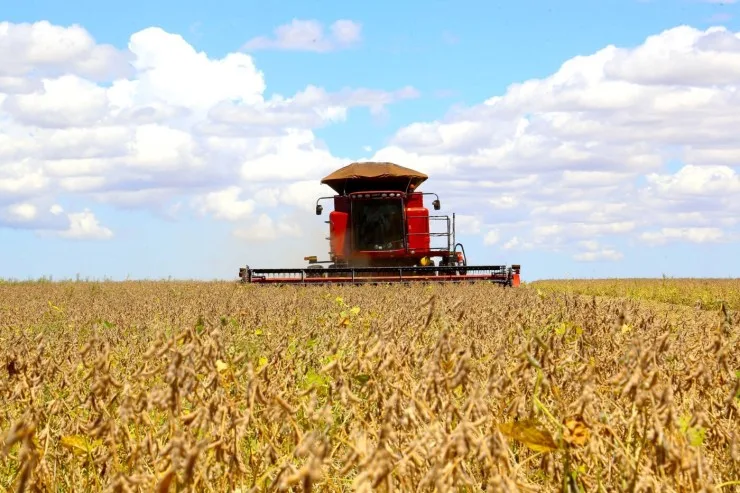
In its monthly review, StoneX, a global financial services company, presented new data for the 2025/26 soybean crop. In the December update, the consultancy adjusted its estimate of national production downwards, now projected at 177.2 million tons — still a historical record, but 0.9% lower than predicted in the previous report.
The reduction results mainly from a negative adjustment in productivity, despite the slight increase in planted area. Irregular rainfall, especially in regions of great importance to Brazilian production, continues to impact the productive potential.

Ana Luiza Lodi, Market Intelligence Specialist at StoneX: “In the country's largest producer, Mato Grosso, there was also a slight decrease in planted area, due to planting delays and the need for replanting in some locations.”
According to StoneX's Market Intelligence specialist, Ana Luiza Lodi, the states of Mato Grosso and Goiás showed cuts in estimated productivity. "In the country's largest producer, Mato Grosso, there was also a slight decrease in planted area, due to planting delays and the need for replanting in some locations," she explains.
Although states in the North and Northeast regions have registered an expansion in area, this growth has not been enough to offset the projected losses in the Central-West region, which remains crucial for national performance.
According to the expert, the weather will continue to be a key factor in future updates. "The consolidation of productive potential will depend on rainfall patterns in the coming months. A regularization of rainfall will be essential to confirm crop expectations," emphasizes Ana Luiza.

Corn production is projected to rise to 26.1 million tons.
In this survey, StoneX revised its projection for the 2025/26 summer corn crop and raised its estimate of national production to 26.1 million tons, an increase of 1.91 TP4T compared to the November report.
The adjustment was driven by the growth in the area planned for planting in states in the North and Northeast, where the planting of the first crop usually occurs later. "In terms of productivity, Rio Grande do Sul stood out for the good development of its crops so far — although the consolidation of this scenario still depends on rainfall throughout December," shares Ana.
As with soybeans, the weather remains a determining factor in the final harvest. Although the first corn crop is smaller than the second, its importance for domestic supply in the first half of the year remains high, especially in years with greater weather volatility.

Estimates for the second corn crop show an increase of 1.1%
In the December revision, the estimate for the second corn crop fell to 105.8 million tons, a decrease of 1.11 TP4T compared to the previous month. Concerns persist about delays in the soybean cycle, which could affect the start of planting the second corn crop—a stage that presents less risk when planted earlier.
Considering the three corn harvests, including the third, projected at 2.5 million tons, the total production for the 2025/26 cycle is estimated at 134.4 million tons, a volume 0.6% lower than that announced in November. "Weather conditions will remain central to defining the productive potential of corn in the coming months," explains Ana Luiza.