EN
EN  PT_BR
PT_BR 
The Minister of Agriculture and Livestock participated on Saturday (06) in the first delivery of fingerlings from the Piscicultura Mais Vida project. The initiative is a partnership between the Ministry of Agriculture and Livestock (Mapa), the Brazilian Agricultural Research Corporation (Embrapa) and the Federal Institute of Mato Grosso (IFMT).
This first delivery benefited 40 family farming households registered in the program, who received up to a thousand fish, according to the capacity of their tanks. The remaining families registered in the program will receive the fingerlings over the next few weeks. The event was held at the Embrapa Mixed Research and Innovation Unit (Umipi) in Nossa Senhora do Livramento (MT). “I wouldn't be a fulfilled minister if I were only there to take care of large-scale agribusiness. It's a great mission to seek to eliminate these inequalities, to make every inch of land in Mato Grosso a prosperous land that generates wealth and development for the people,” the minister emphasized in his speech.
“We started this work with programs to structure, provide equipment and machinery for settlements and small farms, in partnership with the municipalities. And I am very happy to see that here in the municipality, the tanks are already being built to strengthen fish farming,” added Fávaro.
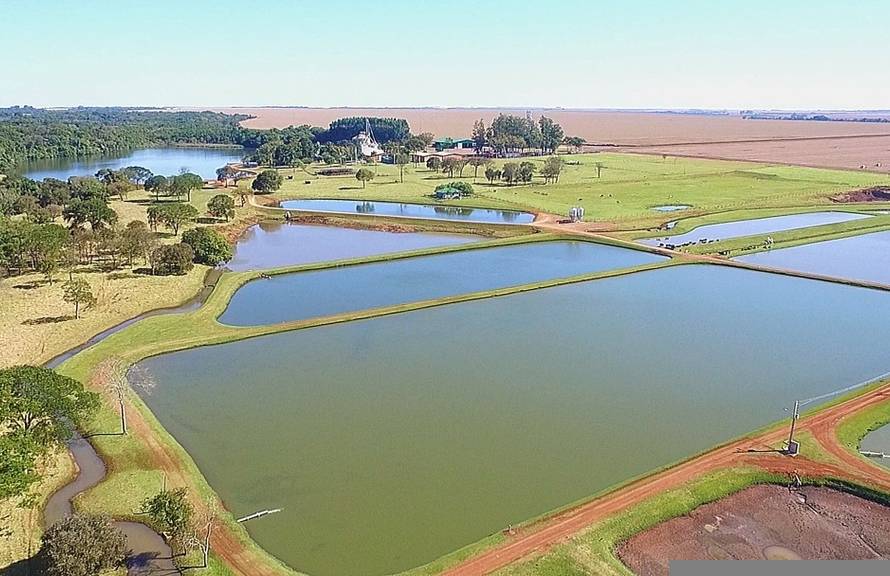
During the event, the minister also visited the fish farming station, the technical laboratories, and the hatchery, observing the entire process of breeding the broodstock and raising the fry.
One of the project beneficiaries, family farmer Agnaldo Jesus Botelho, explained how these fingerlings will boost his production. In addition to cassava production, he has two fish farming tanks on his property in the Guia district. "There's no river anymore, you can't fish or transport anything, so we have to raise them in tanks, and the sale of the fish accounts for 50% of our income," Agnaldo detailed.
The head of Embrapa Agrossilvipastoril, Lucimar Vendrúsculo, highlighted the impact of the action. “It’s a historic act, a new growth in the Baixada Cuiabana region. A joint effort of the agricultural sector present here in the Baixada Cuiabana, which is often fraught with challenges; at this moment we are solving them, taking an important step because we are together.”
The rector of IFMT, Professor Julio César dos Santos, spoke about the production goal. “When we signed the agreement with MAPA (Ministry of Agriculture, Livestock and Supply) for the production of fingerlings, the minister requested at least 1 million. The team's goal is to produce 5 million by the end of March with the same resources allocated for the production of 1 million.”
The mayor of Nossa Senhora do Livramento, Thiago Almeida, emphasized that the program complements the municipality's actions, which has already delivered around 70 fish farming tanks this year. "The beneficiary families are registered in the 'Piscicultura Mais Vida' program and will receive donated fingerlings," he stated.
Initiative
Launched in March of this year and developed in Embrapa's fish farming tanks in the Baixada Cuiabana region, the Piscicultura Mais Vida (Fish Farming More Life) project provides free fingerlings to riverside communities, quilombola communities, and indigenous people enrolled in Federal Government programs who have the infrastructure and conditions for fish farming, and, in a subsidized manner, to family farmers.
It is also a center for continuing education for fish farmers, offering instruction and leveling courses, becoming a benchmark in the production and supply of fingerlings, as well as the technical qualification of producers.
The project's general coordinator, Professor Laila Natasha, PhD, from IFMT, explains that one of the project's focuses is sustainability, working with native species. "It's important to preserve these fish and for our producers to learn how to cultivate and produce them in the best way. In a next stage, we will also work on vertical integration," she said.