EN
EN  PT_BR
PT_BR 
With the planting of the 2026 second crop completed in practically all the planned area in the country, producers are now entering the most sensitive phase of the production cycle: crop development. Amid pressure on costs and the advancement of irrigation in producing regions, electricity has come to occupy an increasingly important place in the financial strategy of rural properties.

Production engineer Gustavo Sozzi, entrepreneur in the energy efficiency, management and storage solutions segment: "The farmer already plans for seeds, fertilizer, pesticides and freight."
Historically treated as a secondary expense within agricultural operations, the energy bill is beginning to gain importance due to the combination of tariff increases, greater dependence on irrigated systems, and the need for continuous supply for storage, drying, and production management. “The farmer already plans for seeds, fertilizer, pesticides, and freight. But energy still enters the equation as a residual expense. With tariffs at the current level and new adjustments expected later this year, those who don't plan for energy before planting are already starting the off-season at a disadvantage,” says production engineer Gustavo Sozzi, an entrepreneur in the energy efficiency, management, and storage solutions sector.
The projections reinforce the sector's concerns. Estimates from the consulting firm PSR indicate an increase of up to 7.95% in electricity tariffs in 2026, a percentage higher than the expected inflation for the period. At the same time, subsidies paid by consumers to the electricity sector are expected to reach R$ 47.8 billion this year, an increase of 17.7% compared to 2025.
In rural areas, the impact is even more noticeable in regions where agricultural expansion is accompanied by increased irrigation. Studies by the Energy Research Company (EPE) show that rural electricity demand is growing above the national average in the Central-West and Matopiba regions, areas that concentrate a large part of the second crop production. Today, the irrigated area in Brazil exceeds 8 million hectares.

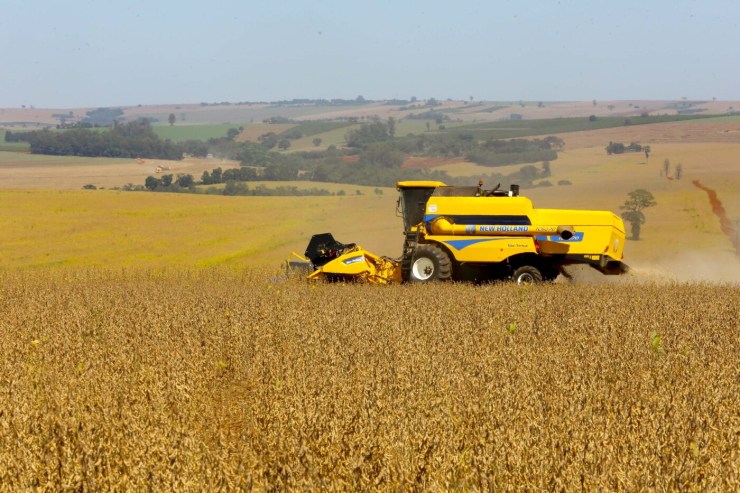
Photos: Courtesy of AtmosMarine
Data from the University of São Paulo (USP) indicate that center pivot irrigation systems can represent up to 30% of the total production costs on certain properties, depending on the crop and operating model. “A lack of energy at the wrong time is not just an operational cost. It's lost productivity, grain deteriorating in the silo, and a pivot stopped during a critical period of crop development. Producers need energy predictability in the same way they need weather forecasts to make decisions in advance and not just put out fires,” says Sozzi.
This scenario occurs at a time of high production, but tighter profitability for some producers. Mato Grosso, the country's main corn-producing state, is expected to cultivate approximately 7.4 million hectares in the 2026 second crop season, with production expected to exceed 47 million tons, according to data from the Mato Grosso Institute of Agricultural Economics (Imea).
In the Center-South region, Safras & Mercado estimates production at around 100 million tons. To date, approximately 17.9% of the projected volume has already been sold.

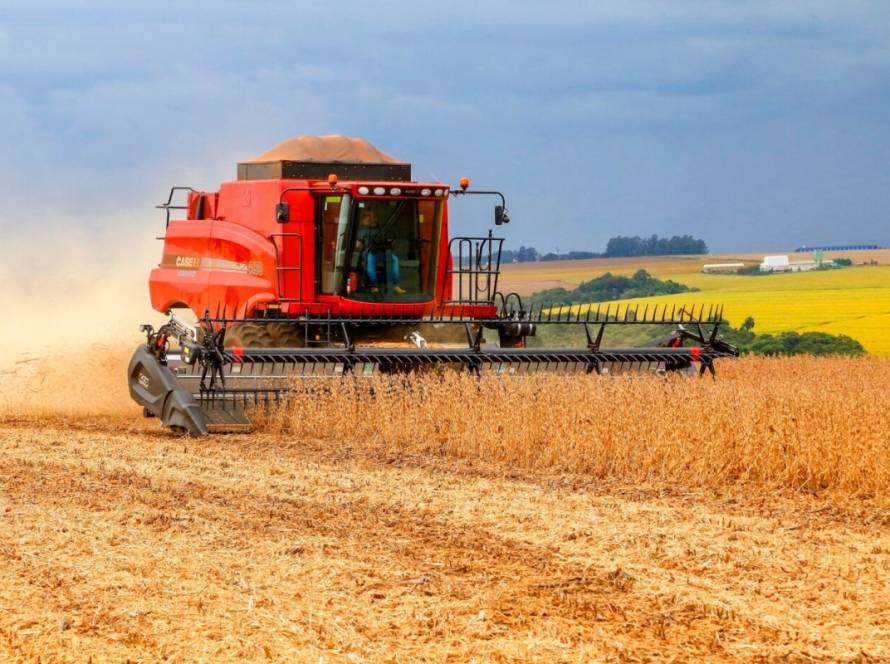
Photo: CNA
With high costs and less room for operational losses, the discussion about energy efficiency as an agricultural management tool is growing in the sector. According to Sozzi, Brazilian agribusiness has already incorporated advanced technologies in various stages of production, but still treats energy reactively. “Brazilian agribusiness already operates with a high degree of technological sophistication. Drones, sensors, biotechnology, and data management are already part of the routine. Energy is the next step. There is no high-performance management with an essential input being treated reactively,” he emphasizes.
Among the strategies adopted in the field are contract renegotiation, use of differentiated tariffs for nighttime irrigation, migration to the Free Energy Market, and self-generation projects.
According to Sozzi, energy efficiency practices can reduce irrigation costs by between 20% and 30% on medium and large-scale farms. "In a scenario of tight margins, how the producer manages energy can be the factor that separates profitability from loss in the 2026 off-season," he emphasizes.