EN
EN  PT_BR
PT_BR 
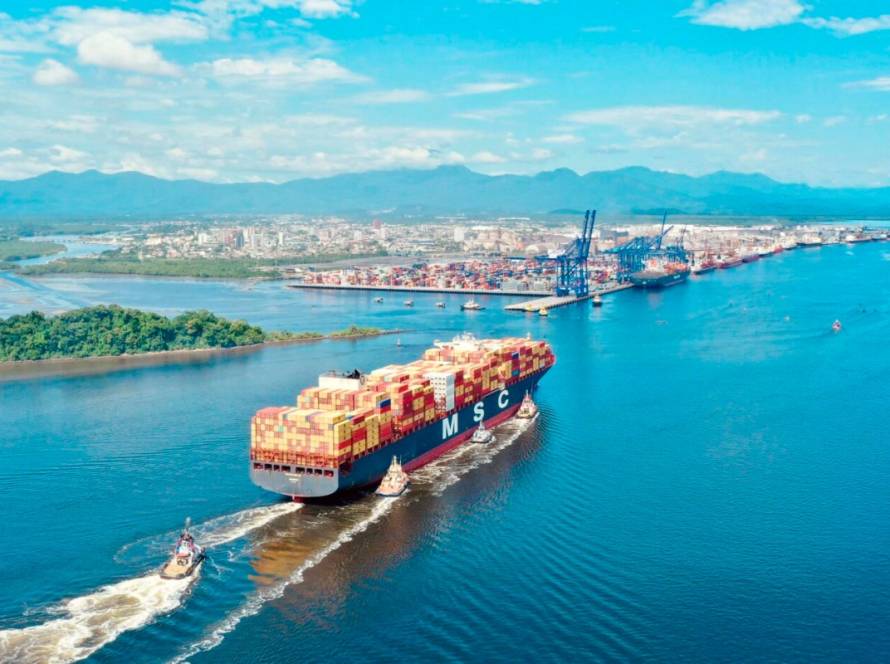
Exports from Paraná totaled US$2.24 billion in April 2026, a growth of 7.74 billion compared to the same period last year, when the state recorded US$2.08 billion in sales to the international market. The data comes from the Ministry of Development, Industry, Trade and Services, compiled by the Paraná Institute for Economic and Social Development (Ipardes).
In addition to the year-on-year increase, April marked the fourth consecutive month of growth in Paraná's exports in 2026. In January, external sales totaled US$1.41 billion, rising to US$1.8 billion in February and US$2.1 billion in March, before reaching US$2.24 billion in April.

Photos: Claudio Neves/Ports of Paraná
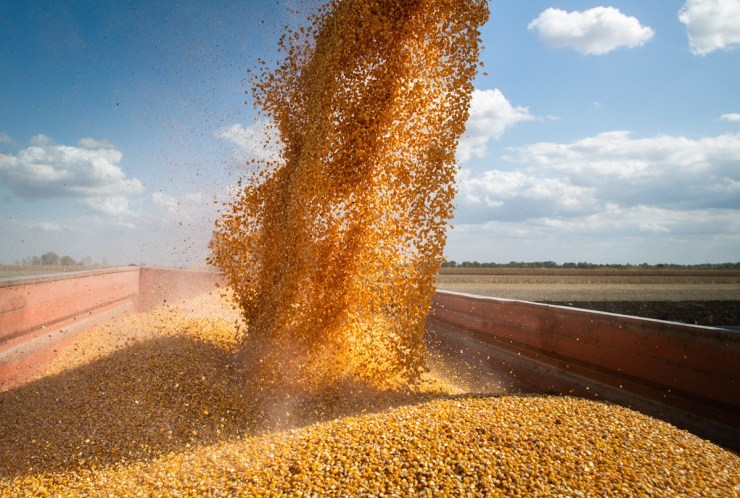
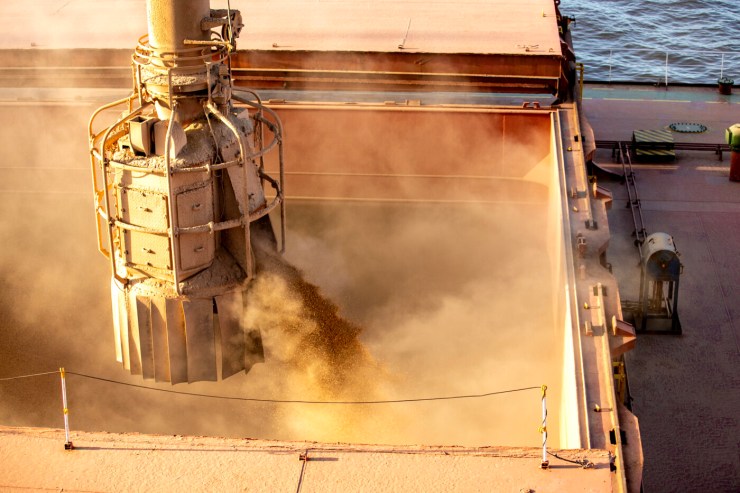
The positive performance in April was driven mainly by increased exports of soybeans, soybean oil and soybean meal, as well as earthmoving and drilling machinery, segments that experienced strong growth compared to the previous year.
Exports of soybeans grew by 14.41%, rising from US$478 million in April 2025 to US$547 million in the same month this year. Soybean meal exports also registered an increase of 39.91%, jumping from US$97 million to US$136 million.
The largest proportional increase among the main exported products was observed in soybean oil, whose international sales practically doubled in one year. The financial volume went from US$$ 52 million to US$$ 101 million, representing an increase of 94.8%.
Exports of earthmoving and drilling machinery also showed significant growth, expanding from US$44 million to US$74 million.
In the first four months of the year, the state's exports totaled US$7.54 billion, the sixth largest volume in the country and the largest in the Southern region.
Consumer markets

Among the main destinations for goods from Paraná, India, China, and Colombia played a significant role in the growth of state exports in April.
Sales to India increased by 75.92% between April 2025 and 2026, rising from US$$ 57 million to US$$ 100 million. Exports to China, Paraná's main trading partner, grew by 6.17%, increasing from US$$ 559 million to US$$ 593 million. Exports to Colombia more than doubled during the period, rising by 110.29%, from US$$ 30 million to US$$ 63 million.
In the year-to-date figures, China remains the main buyer of products from Paraná, accounting for 23.8% of the state's exports. Following are Argentina (5.3%), the United States (3.7%), India (3.6%), and Mexico (3.5%).
Among the countries that most increased their purchases of products from Paraná in the first four months of 2026, India stands out, with imports growing by 60.81% of the total value of goods sold (TP4T), rising from US$169.1 million to US$272 million. Japan showed an even greater expansion, of 115.3% of the total value of goods sold (TP4T), increasing from US$92.7 million to US$199.7 million.
The CEO of Ipardes, Jorge Callado, highlighted that the result was achieved even in the face of instability in the international scenario. "Despite the interruption of some trade flows due to military and geopolitical disputes, exporters from Paraná managed to expand their businesses through alternative markets and routes," he stated.
Industrialization

The growth in exports of soy derivatives follows the expansion cycle of Paraná's agribusiness, driven by new investments in grain processing and industrialization in the state.
In March of this year, Governor Carlos Massa Ratinho Junior participated in the inauguration of the new soybean oil and meal processing plant of the Tradição Cooperative in Pato Branco. The complex received an investment of R$ 770 million and has the capacity to process up to 3,000 tons of soybeans per day, strengthening the added value of regional production and reducing dependence on the export of raw grains.
In the same month, the Potencial Group inaugurated a new soybean crushing plant and a refined glycerin plant in Lapa, in the Metropolitan Region of Curitiba, as part of an expansion cycle that foresees R$6 billion in investments by 2030. With the expansion, the industrial complex should double its soybean crushing capacity, increasing from 3,500 to 7,000 tons per day.
The state is currently the second largest soybean producer in Brazil. The estimate from the Department of Rural Economy (Deral), of the State Secretariat of Agriculture and Supply, is for a harvest of approximately 22 million tons in 2026, equivalent to about 13% of national production.