EN
EN  PT_BR
PT_BR 
Last year, the Northern Corridor reached its highest recorded volume in operation, with approximately 15 billion tons per useful kilometer (TKU), an increase of 4.1% compared to 2024. This result consolidates the route as one of the main logistical axes for the flow of agricultural and industrial production in the country, especially from the Matopiba region, comprised of Maranhão, Tocantins, Piauí, and Bahia.
The structure integrates the northern section of the North-South Railway with the Carajás Railway, connecting producing areas to the Port of Itaqui in Maranhão. This logistical arrangement reduces distances to international markets and increases the competitiveness of Brazilian production, especially grains.

Photo: TLSA Press Release
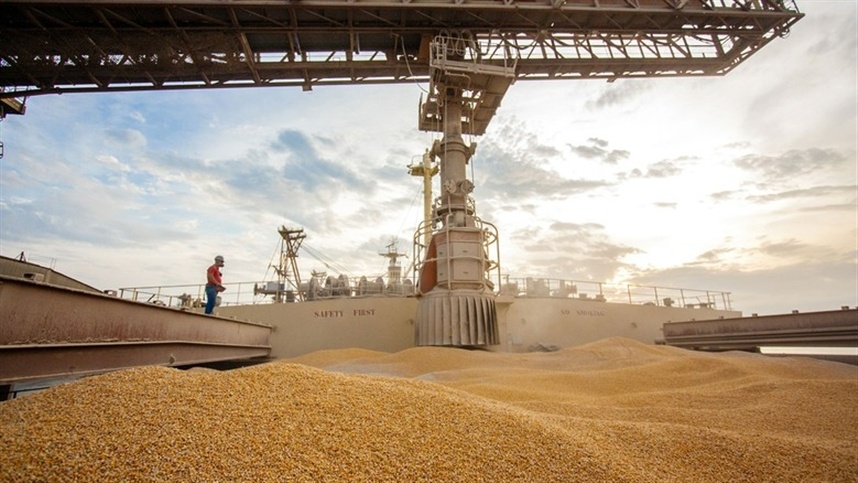
Rail performance had a direct impact on the São Luís Port Terminal (TPSL), which handled almost 5.8 million tons at Berth 105 throughout the year, also a record. The operation focuses on shipments of soybeans, corn, bran, as well as cargo such as pulp, fuels, and pig iron.
According to Cesar Toniolo, Operations Director of VLI's Northern Corridor, the trend is for increased cargo flow through the region. "We believe that the North is the natural route for cargo from the entire Matopiba region, captured by our logistics corridor," he states.
The corridor's efficiency is directly linked to the presence of integrated terminals inland. The units in Porto Nacional and Palmeirante, in Tocantins, and Porto Franco, in Maranhão, function as transshipment points between road and rail transport, in addition to offering storage capacity. These assets are strategic for reducing logistics costs, organizing cargo flow, and increasing the predictability of operations.

Photo: Jonathan Campos/AEN
In 2026, the Porto Nacional (TIPN) and Palmeirante (TIPA) terminals will have completed ten years of operation, accumulating approximately 59 million tons handled during that period. Since the start of operations in 2016, the annual volume in these units has increased from 1.9 million to 8 million tons, a growth of 320%.
The expansion is keeping pace with the region's productive dynamics. Between 2016 and 2025, rail traffic in the corridor increased from 5.4 billion to 14.9 billion TKU, highlighting the growing demand for logistics infrastructure compatible with the growth in agricultural production.
With investments exceeding R$260 million in the implementation of the terminals, the corridor has consolidated a structure capable of integrating production, storage, and transportation on a large scale. For the agribusiness of Matopiba, the route represents cost reduction, greater access to foreign markets, and less dependence on traditional export corridors.