EN
EN  PT_BR
PT_BR 
The 4th Congress of the Brazilian Association of Corn and Sorghum Producers (Abramilho) brought together, this Tuesday (May 13), in Brasília (DF), agribusiness leaders, specialists and representatives of the productive sector to discuss the main challenges and opportunities of Brazilian agriculture. The Mato Grosso Soybean and Corn Producers Association (Aprosoja MT) was present at the meeting, which addressed strategic themes such as innovation, food security, sustainability and the impacts of world geopolitics on agriculture.
Aprosoja MT was also present at the congress with an institutional booth, where it presented brochures with information about the main projects developed by the organization and answered participants' questions about its actions and initiatives in defense of the productive sector.
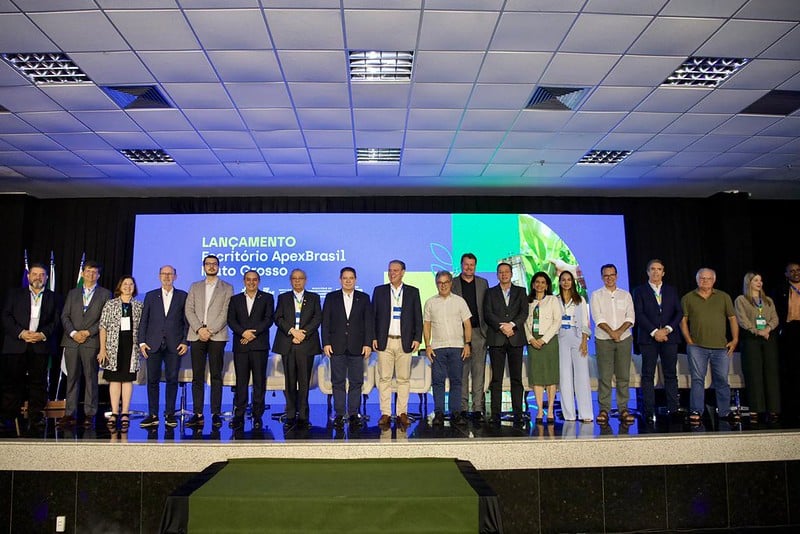
The vice-president of Aprosoja MT, Luiz Pedro Bier, participated in the panel “Agriculture in transformation: current challenges and proposals to strengthen the sector”, alongside the vice-president of Brazil, Geraldo Alckmin, Senator Tereza Cristina, the president of OCB, Tânia Regina Zanella, the president of Abramilho, Paulo Bertolini, federal deputy Pedro Lupion, the representative of CNA, Daniel Carrara, and the Minister of Agriculture and Livestock, André de Paula.
During the debate, measures were discussed to increase the competitiveness of Brazilian agriculture, strengthen national production, and guarantee legal and economic security for rural producers in the face of the challenges faced by the sector.
The vice-president of Aprosoja MT, Luiz Pedro Bier, explained the main bottlenecks that still need to be overcome to guarantee the profitability and competitiveness of corn production in Mato Grosso.
"Mato Grosso is the largest corn producer in Brazil. However, the state has logistical and storage difficulties, and these are the bottlenecks we need to resolve. Corn is a very important product, and we need alternatives to make corn more profitable harvest after harvest," he added.
Bier further emphasized how corn has ceased to be merely an alternative source of income and has become fundamental to the viability of productive activity in the state. “When corn planting began in the state, it came as an additional income alternative. Today, corn is not just important for the producer; it is fundamental to productive activity. Corn is what balances the books. The more corn the producer plants, the easier it is to dilute the fixed costs of soybeans,” the vice-president points out.
Abramilho's executive director, Glauber Silveira da Silva, says that the congress is already a well-established event in the sector, bringing together debates, panels, and discussions focused mainly on the political agendas of agribusiness. According to him, the meeting also aims to bring the press closer to the main information and demands of the productive sector, bringing together journalists from different regions of the country.
“It’s a congress more focused on political discussions, so in this edition we are debating topics such as the Harvest Plan, geopolitics, fertilizers, and the issue of diesel. Furthermore, the congress also aims to bring the press closer to the main issues in agriculture. That's why we've gathered almost 100 journalists from various regions of Brazil here, strengthening the dissemination of information on a daily basis,” he emphasizes.
For rural producer and member of the Vale do Arinos Nucleus, Renato Tozzo, participating in the 4th Abramilho Congress was an important opportunity within the Aprosoja MT Leadership Academy. According to him, the event allowed him to follow relevant discussions about the future of agriculture, the financial scenario faced by producers, and strategic issues for the sector, in addition to the presence of important political and institutional leaders from the country.
“For me, and I believe for everyone participating in the Leadership Academy, it was very important to get to know Abramilho at this crucial moment for our country. We are discussing here the future of agriculture, the decisions that impact the sector, and the financial situation of producers. Participating in an event like this, in Brasília, greatly enhances our training,” he concludes.