EN
EN  PT_BR
PT_BR 
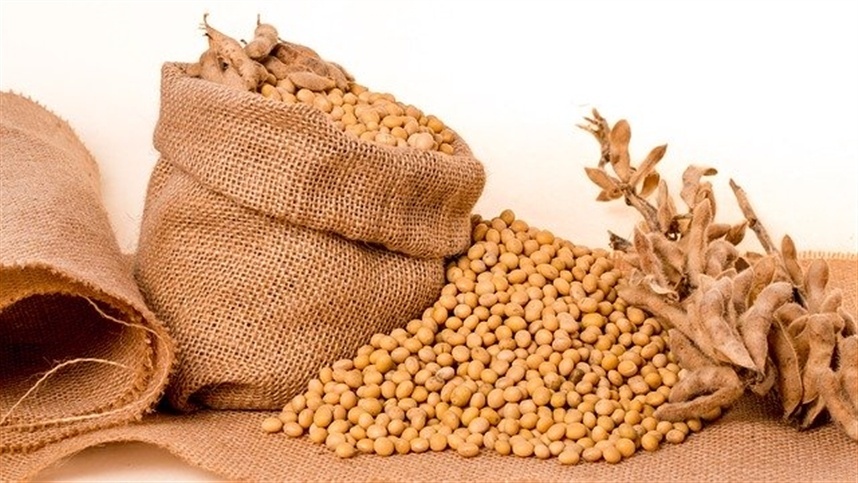
The United States Department of Agriculture (USDA) has raised its projection for global soybean production in the 2026/27 crop year and maintained Brazil's global leadership in the commodity. According to the Radar Agro report from Itaú BBA Agro Consulting, released in May, global production should reach 442 million tons, an increase of 31% compared to the previous cycle.

Photo: CNA/Senar System
The document projects that Brazil will produce 186 million tons of soybeans in 2026/27, up from the 180 million tons estimated for 2025/26. This volume represents a growth of 3.31 TP4T and reinforces Brazil's position as the world's leading producer of the oilseed.
The USDA also points to an increase in Brazilian exports, estimated at 117.5 million tons in the next season, compared to 115 million in the previous cycle. Domestic crushing is expected to rise from 61.5 million to 65 million tons, reflecting higher domestic demand from the industry.
Among the main factors monitored by the market is Chinese demand. The report estimates Chinese soybean imports at 114 million tons in 2026/27, up from the 112 million tons projected for 2025/26. Chinese consumption is expected to reach 135 million tons. "The USDA projects Chinese imports at 114 million tons, versus 114 million tons in 2025/26," the report highlights, pointing to the continued Asian demand for Brazilian soybeans.
Despite the growth in global soybean production, the report shows a reduction in the world stock-to-consumption ratio, which is expected to fall from 29% to 28%, signaling less slack in international supply.
Global corn stocks are expected to decrease.

Photo: Disclosure/OPR Archive
For corn, the USDA projects global production of 1.295 billion tons in 2026/27, a slight decrease of 1% compared to the previous cycle. Even so, Brazil is expected to increase its production to 139 million tons, above the 135 million tons estimated for 2025/26.
Estimates for Brazilian corn exports have risen to 44 million tons, while domestic consumption is expected to reach 97 million tons, driven mainly by the animal feed and industrial sectors.
In the United States, the USDA forecasts a reduction in corn production from 432.3 million to 406.3 million tons, in addition to a drop in exports from 83.8 million to 80 million tons. "The USDA estimates a reduction in US exports in 2026/27, from 83.8 to 80 million tons," the document states.
The global cereal balance shows a reduction in world ending stocks to 278 million tons, a decrease of 7% compared to the previous year. The stock-to-consumption ratio fell from 23% to 21%, indicating a tighter supply scenario.
Wheat and cotton see a decrease in supply.

Photo: Gilson Abreu/AEN
For wheat, the USDA estimates world production of 819 million tons in 2026/27, a decrease of 31% compared to the previous cycle. Global consumption, however, is expected to reach a record 819 million tons.
In the United States, production is expected to fall from 54 million to 42 million tons, while the Brazilian harvest is projected at 6.7 million tons, a drop of almost 151 TP4T compared to the previous season. "The USDA projects world wheat production at 819 million tons, a decrease of 31 TP4T compared to 2025/26," the report notes.
In cotton, the projection is for a reduction in global production to 25.3 million tons, a drop of 5%. The Brazilian harvest is expected to decline from 4.2 million to 3.8 million tons in 2026/27.
Even with lower production, the USDA forecasts an increase in Brazilian cotton exports to 3.3 million tons. Global ending cotton stocks are expected to fall from 16.8 million to 15.6 million tons. "Global ending cotton stocks in 2026/27 are projected at 15.6 million tons, versus 16.8 million tons in 2025/26," the document points out.