EN
EN  PT_BR
PT_BR 
Paraguay's soybean crop enters December with an estimated 9.1 million tons for the main crop and 1.3 million tons for the second crop, totaling 10.5 million tons projected for the 2025/26 cycle, according to an analysis by StoneX, a global financial services company. The projection reflects a monthly cut of 2% in the estimate, following initial adjustments caused by irregular rainfall in November.
After a start considered ideal between September and October, the lack of regular rainfall has already impacted some of the country's most productive regions, such as Alto Paraná, Itapúa, and Caaguazú — precisely the three departments that have suffered reductions in yield expectations.

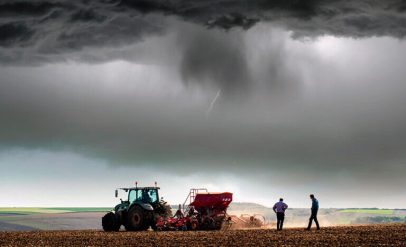
According to the United States National Oceanic and Atmospheric Administration (NOAA), the La Niña phenomenon—although less dry than in previous years—is expected to persist until the summer of 2026. The combination of this climate pattern and possible periods without rain during grain filling could cause moderate water stress and increase the dispersion of yield results among planted areas.
“For the beginning of December, the forecast indicates low rainfall volumes in Paraguay. From the 8th onwards, however, most of the Eastern Region should receive significant rainfall, followed again by some dry days and a second pulse of rain around the 14th,” says StoneX Market Intelligence analyst Larissa Barboza Alvarez.
So far, some regions of Itapúa have needed to replant areas, and similar isolated situations have been recorded in San Pedro. As the cycle began with mild temperatures and abundant rainfall, the plants developed well, but without stimuli to create more resistant structures—such as thicker leaves or greater drought tolerance. If adverse conditions intensify, this reduced physiological preparation could impact final productivity.
Planting window adjusted: second crop will depend on the pace of the harvest.

Photos: Shutterstock
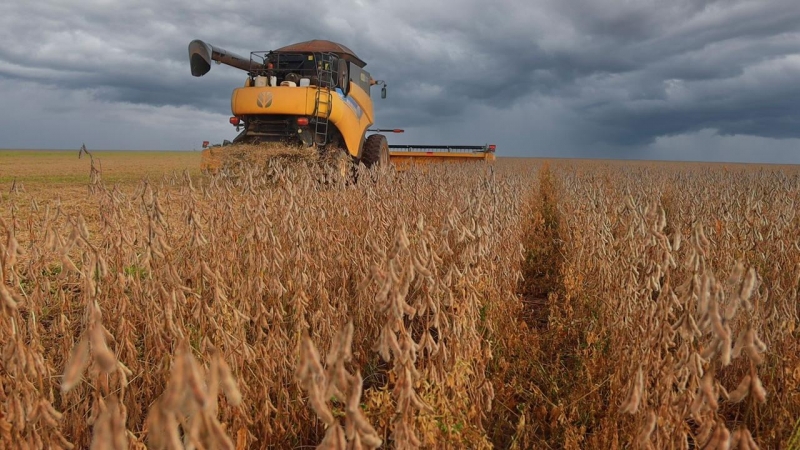
The potential extension of the main crop cycle could directly influence the start of the second soybean crop, whose ideal planting window extends until mid-January. After this period, the tendency to switch to corn increases. "For now, StoneX has not revised its planted area estimates, and any changes should only emerge in early 2026," shares Larissa.
In the market, the first days of November saw significant progress: 19% of the 2025/26 soybean crop has already been sold, compared to 13% in the previous month. Specific price increases in Chicago contributed to accelerating negotiations. The 2024/25 crop is fully sold.
Paraguay has already exported half of its second-cycle corn production.
Just like the second-crop soybean, the second-cycle corn is waiting for the main harvest to end before competing for acreage. Meanwhile, sales of the 2025 second crop continue at an accelerated pace, already reaching 90%.

The limited static capacity of the silos means that almost all the corn is exported before the start of the next cycle—a trend expected to continue in the coming months, with continuous shipments until stocks are depleted. For the 2026 corn crop, it is estimated that 7% has already been sold.
Data from Paraguayan Customs shows that, up to October, the country exported 2.3 million tons. With StoneX's estimated production at 5.7 million tons, this means that half of the corn produced has already left the country.
Domestic consumption is also growing, totaling around 2 million tons annually, driven by the animal protein, feed, and ethanol production sectors. "With this strong demand, StoneX indicates that the domestic market tends to maintain supported prices, leading some regions to prioritize domestic sales over exports," concludes Larissa.