EN
EN  PT_BR
PT_BR 
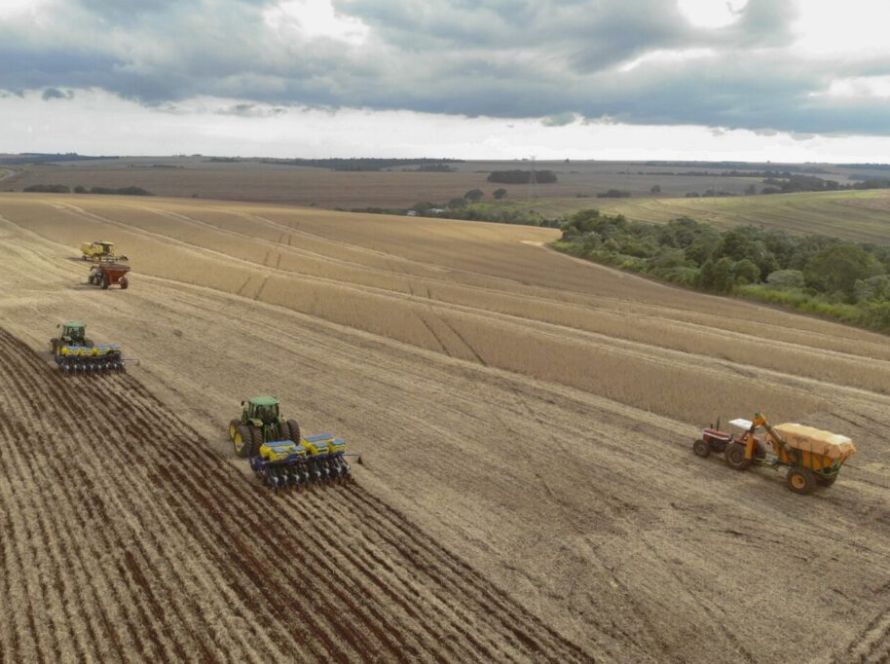
Brazil's leadership in the global soybean market is largely due to the adoption of no-till farming. By avoiding tilling the soil, Brazilian soybean producers are able to reduce erosion, increasing water absorption capacity in planting areas and maintaining nutrients. The problem is that this practice is widely adopted in the country in isolation, without being accompanied by other procedures for soil conservation and regeneration, such as crop rotation..
Among the consequences of the widespread adoption of incomplete no-till farming is the increasing use of herbicides to control weeds in soybean crops, according to the study “How can soybeans lead the transition of Brazilian agriculture?”, launched this Monday (13) by the Escolhas Institute in partnership with the Folio Institute.
 Over 30 years, the estimated use of herbicides in grain production has grown by 2.274%. Between 1993 and 2023, the area under no-till farming increased by 11% per year, the same percentage growth as the use of synthetic herbicides in soybeans, according to the survey. “Without considering integrated systems, such as the No-Till Farming System, the practice of no-till farming in isolation can generate negative consequences for the soil, such as compaction and increased use of herbicides to control weeds. We are replacing one negative impact (caused by soil disturbance) with another (caused by the intensive use of pesticides),” says Jaqueline Ferreira, one of the coordinators of the Escolhas study.
“The implementation of the No-Till Farming System, which includes the practice of crop rotation, is the way to reduce the use of synthetic herbicides in soybean crops, especially in a context where there are still no bioherbicides available on the market,” he states, emphasizing that the intensive use of herbicides reduces the microbial composition of the soil, which can negatively impact its productive capacity.
The increasing use of synthetic inputs also affects the profitability of producers, as pointed out in a study by Escolhas released last June. In 1993, 1 kg of pesticide produced 23 sacks of soybeans. In 2023, the same amount of pesticide could only produce seven sacks. Between 2013 and 2023, spending on seeds, pesticides, and fertilizers grew by 81% per year in the country.
The new study interviewed 34 farmers from the main soybean-producing states (Mato Grosso, Goiás, and Paraná) and visited their properties, which range from 16 hectares to 19,000 hectares – totaling 88,000 hectares. The group includes conventional, organic, and regenerative producers. The focus was on identifying which practices they implement or fail to implement for soil conservation/regeneration and reduction of synthetic inputs (pesticides and fertilizers).

All conventional producers interviewed adopt no-till farming, but only 31% of them implement crop rotation, 23% have a diversity of live roots, 15% use green manure, and 15% adopt living soil cover. The consolidated production model shows no signs of advancing towards the implementation of a complete no-till system.
The exhaustion of the soybean production model, evidenced by the previous study, puts Brazil's world leadership in grain production at risk. But because it is the country's main agricultural crop – occupying 46% of the total cultivated area in 2023 – soybeans could be the main protagonist in the transition of Brazilian agriculture to more sustainable models adapted to the climate crisis.
For this to happen, it is important that the Brazilian State, together with rural producers and the input industry, establish more ambitious goals, commitments, and public policies for the transition of agriculture. The National Fertilizer Plan exemplifies how far the country is from this reality. The planned investments of R$ 24.41 billion are focused on the production of nitrogen, phosphate, and potassium fertilizers, within the traditional chemical/synthetic model (921% of the total). For emerging chains (such as organomineral and organic fertilizers), the planned investment is only 0.11% of the total.
The new study by the Escolhas Institute proposes five ambitious commitments to boost the transition of Brazilian agriculture. They are:
1 – Make the main goal of the ABC+ Plan — the principal public policy instrument dedicated to promoting sustainable agriculture — to increase the area using the No-Till Farming System (NTFS).
2 – Include plant protection in the ABC+ Plan's goal of increasing the area that uses bio-inputs.
3 – Substantially increase investments from the National Fertilizer Plan in the organomineral and organic fertilizer industry and market.
4 – Invest in research, development, and structuring of the biopesticide industry and market.
5 – Invest in research, training, and the provision of technical guidance to support producers in implementing more sustainable production practices.
Click here To read the Executive Summary of the study "How can soy lead the transition of Brazilian agriculture?", conducted by the Escolhas Institute.