EN
EN  PT_BR
PT_BR 

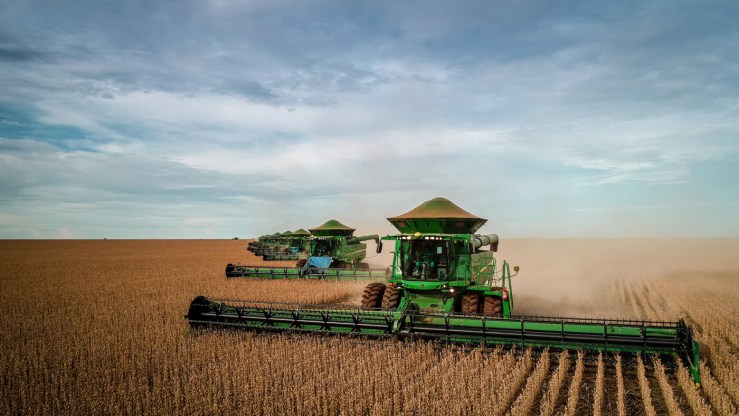
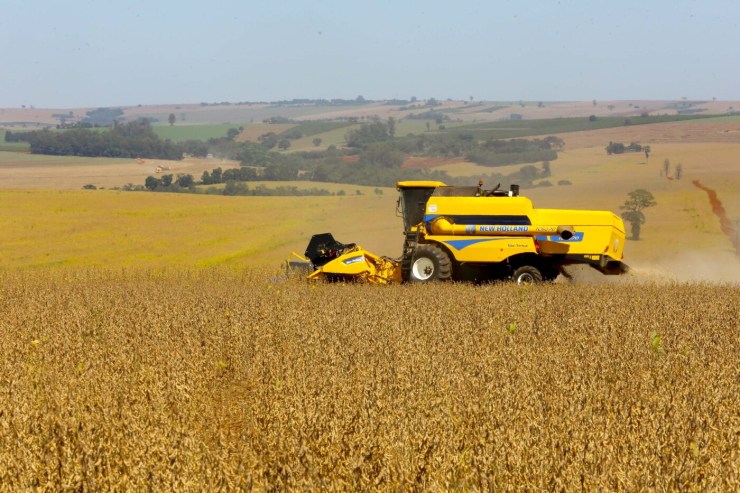
Mechanized bean harvesting requires precise planning and adjustments to reduce grain losses, breakage, and damage to commercial quality. In different producing regions and under different climate and soil conditions, the machine's entry point, crop uniformity, and harvester adjustments are crucial for preserving the productive potential built up throughout the cycle.
The harvest point defines the risk of losses.
The timing of the harvester's entry must balance the need to reduce losses due to natural threshing and preserve grain quality. Generally, the recommendation is to harvest when the plants are dry, with most of the leaves already fallen and the pods in the final stage of drying. Around 80°C to 90°C of the pods should be mature.
Very green pods can result in grains with high moisture content, making threshing difficult and increasing the need for drying. On the other hand, delaying the operation too much makes the grains more brittle and increases losses due to the natural opening of the pods.
Generally, producers aim to harvest grains with a moisture content between 18% and 22%, followed by drying to approximately 12% to 13%. This condition should be checked with a suitable moisture meter. It is also important to monitor the weather forecast. Prolonged rainfall after maturity can re-wet the plants, promote late-cycle diseases, and cause regrowth or germination of grains still in the pods.
Uniformity in crop cultivation facilitates harvesting.
Bean plants exhibit differences in maturation between plants and even between pods on the same plant. Uneven planting, water stress, and regrowth after late rains can amplify this difference. Therefore, the producer needs to avoid both premature entry of the machinery and excessive delays in harvesting.
A uniform crop, with adequate plant population and a good balance of fertility and water availability, tends to exhibit more homogeneous maturation and facilitates determining the harvest time. Weed control is also fundamental. Tall weeds increase the volume of biomass processed by the harvester, hinder cutting, cause jams, and overload the cleaning systems.
Adjusting the harvester reduces losses and breakdowns.
In mechanized bean harvesting, losses can occur at the platform, during threshing and separation, or in the cleaning system. At the platform, pods can fall out of the equipment or detach during cutting and feeding. A cutting bar that is too high, excessive speed, and lodged crops favor this type of loss.
In the field, both insufficient and excessive threshing intensity cause problems. Incomplete threshing leaves pods with grains, while aggressive threshing increases breakage and cracking. Cylinder rotation, cylinder-concave spacing, and feed rate should be adjusted according to crop conditions. The manufacturer's manual should guide specific machine settings, with field validation by a qualified professional.
The platform needs to operate close to the ground.
The cutting height should be as low as possible without causing excessive contact with the soil or stones. This care is important because many bean pods are close to the surface. Cultivars with a more upright growth habit and higher insertion of the first pod reduce this challenge. The forward speed also affects performance. Operations that are too fast increase vibrations and impacts on the plants, favor premature threshing, and reduce the machine's responsiveness to uneven terrain. The speed should be compatible with the area conditions and the combine harvester's effective capacity.
The cleaning system deserves attention.
The fan must supply enough air to remove straw and impurities without carrying grain along with the removed material. The sieves need to allow grain to pass through while retaining larger residues. The adjustment should consider the return of grain through the rethreshing system and the amount of product that comes out with the straw. The feed rate also needs to be maintained continuously. Peaks in material input can cause overload, blockages, and loss of efficiency in threshing and cleaning.
Monitor losses during operation.
The assessment of losses should not only occur after the harvest is complete. The producer can use sampling trays or known-area charts to quantify the grains left in the field before and after the combine harvester passes. This methodology allows for the separation of natural losses, which were already present before the operation, from those caused by the machine.
During harvesting, it is recommended to periodically interrupt work to check losses in front of and behind the machine, as well as the percentage of broken and cracked grains. If there are many whole grains on the ground after passing through, there may be excessive loss on the platform or in the sieves. Conversely, a high quantity of broken grains in the tank may indicate excessively aggressive threshing.
Preserve the seed coat to maintain commercial value.
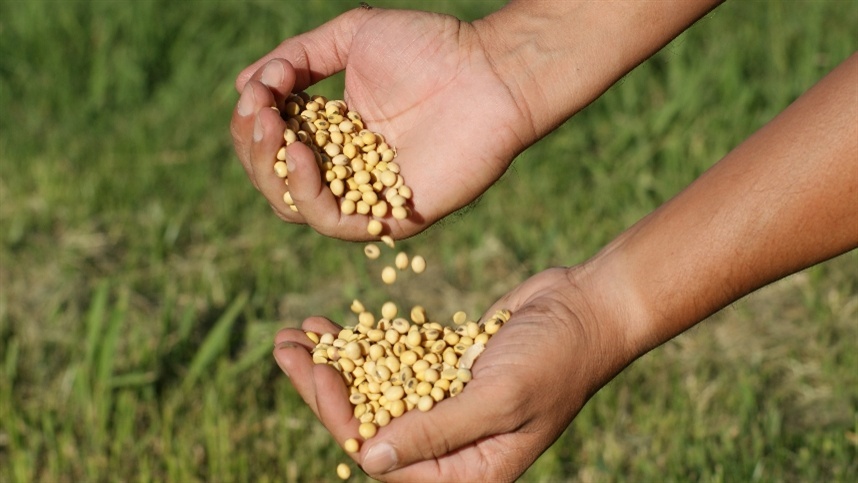
The quality of the harvest depends not only on the quantity of grains remaining in the field. Beans are sensitive to impacts and damage to the seed coat. Breakage, cracking, and removal of the outer layer reduce quality and can compromise commercial value. Drier grains are naturally more brittle, while high threshing system rotations, a very closed concave, and excess material increase impacts. Uneven wear on cylinders, threshing bars, and elevators can also amplify abrasion. Transport and unloading should be considered in the same strategy, as drops from great heights can cause additional mechanical damage.
Preparation of the area affects performance.
Before the harvester enters the field, the ground conditions need to be assessed. Uneven surfaces, pronounced furrows or ridges, stones, and stumps make it difficult to maintain the cutting height and can increase losses of pods close to the ground. Where possible, it is important to keep the ground as even as possible. In no-till farming, irregularities accumulated over the seasons should also be considered in the planning. During rainy periods, the entry of machinery into excessively wet soil should be avoided, reducing the risks of compaction, damage to the soil structure, increased fuel consumption, and traction difficulties.
Management begins before harvest.
The efficiency of mechanized harvesting is built up throughout the entire cycle. Choosing cultivars with an erect growth habit, higher insertion of the first pod, and resistance to lodging facilitates cutting and reduces losses on the harvesting platform.
Balanced fertilization and irrigation are also important. Excess nitrogen or uneven irrigation can increase lodging and cause uneven ripening. Crop rotation planning should consider the distribution of crop residue. Excess poorly distributed residue can make it difficult to cut close to the ground and collect the lower pods.
Complete logistics for loss management.
Harvesting needs to be integrated with the post-harvest structure. Transportation, unloading, and drying must be planned to prevent the beans from remaining exposed to environmental conditions for extended periods after being removed from the field. Available operational capacity should also be considered when deciding to begin harvesting. The number of harvesters, trucks, and drying facilities must be compatible with the volume being harvested. Starting operations without sufficient infrastructure to receive the product can lead to queues, delays, and loss of quality.
Security must accompany the operation.
The operation requires the use of personal protective equipment by the team responsible for harvesting and maintenance. Operators need to know the functions and settings of the combine harvester, read the manufacturer's manual, and identify signs of problems, such as excessive losses, broken grains, and frequent blockages. Preventive maintenance of the platform, threshing, separation, cleaning, and internal transport systems reduces failures and the risk of accidents. Adjustments, unclogging, and interventions on moving parts must be carried out using appropriate safety procedures.
The recommendations presented are general. The ideal harvest point and machine settings depend on specific climate, soil, cultivar, and management conditions. Decision-making should be done with the guidance of an agricultural engineer or qualified technician, in addition to following the manufacturer's instructions.