EN
EN  PT_BR
PT_BR 
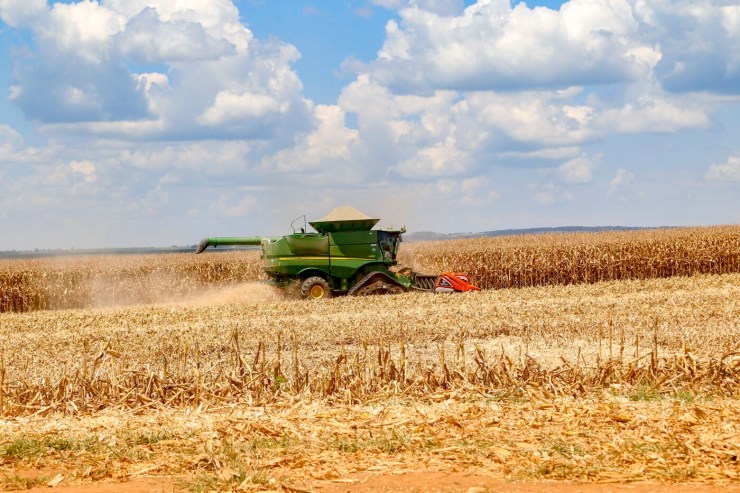
The persistence of rains in October and the occurrence of the gibberella fungus in some crops have been impacting the harvest of this year's wheat crop, but the production estimate remains at 3.7 million tons. The assessment of the current crop and the grain marketing situation were topics addressed during the meeting of the Wheat Sector Chamber, held virtually on Monday (10).

Photo: Jose Fernando Ogura
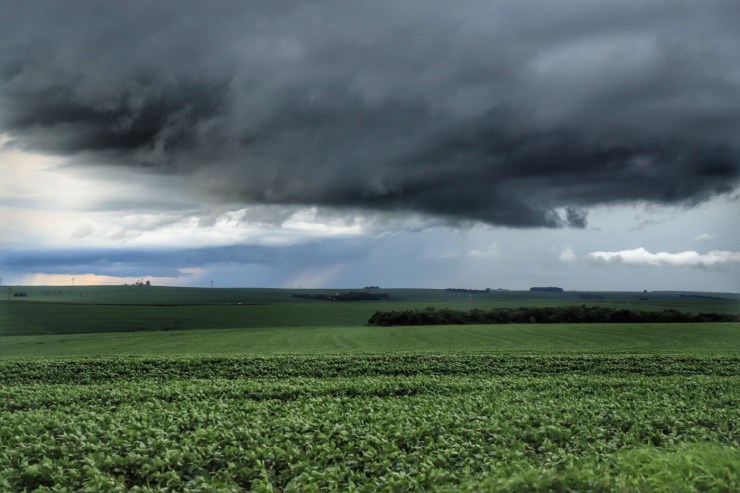
“The harvest was going very well, in conditions similar to the 2022 harvest. The issue is that the defining month, October, had a lot of rain, altering the hectoliter weight (HLW) of the wheat and delaying the harvest. There was also an occurrence of Fusarium head blight. We still expect a good harvest, but with variable performance depending on the region of the state,” said the manager of the annual crops area at Emater/RS-Ascar, Alencar Rugeri.
Wheat harvesting in Rio Grande do Sul is at 40%, according to data from Emater. "We have practically half of the crop still in the field, and this is a weakness in terms of the main end-of-cycle diseases," warned Alencar.
The operations assistant of the National Supply Company (Conab), Matias José Führ, said that the entity shares the same perception as Emater/RS-Ascar regarding the current wheat harvest. “We are seeing a large variability in productivity in the fields, from just over 2,000 kilos to more than 4,000 kilos per hectare. Many areas were planted with low technological standards, which should also influence expectations. Therefore, the official estimate today is still very close to the initial one, of 3,200 kilos per hectare, with a cultivated area of 1.15 million hectares,” he enumerated.
Marketing

The sector considers the current wheat market situation delicate, with very low prices discouraging producers. The Federal Government recently announced support for the flow and commercialization of up to 148,000 tons of wheat from Rio Grande do Sul, through public auctions of the Producer Equalization Premium (Pepro) and the Production Flow Premium (PEP). “It’s an important action, but insignificant compared to the state’s production. It sets an unrealistic benchmark for commercialization, leaving wheat producers in a very difficult position. We view wheat production in Rio Grande do Sul with great concern,” criticized the president of the Federation of Agricultural Cooperatives of Rio Grande do Sul (Fecoagro-RS), Paulo Pires.
The director of Moinho Santa Maria, Tino Antoniazzi, pointed out that all commodities have been suffering from low prices. “The overall picture isn't good, but sales are guaranteed. Today, producers are fortunately able to negotiate, and exports are functioning. Wheat has already hit rock bottom in terms of price, so I think it's only going up from here. We are currently in a period of high supply; perhaps we should wait a little for conditions to improve,” he considered.
In this respect, one of the actions of the Sectoral Chamber will be to request, from the Federal Government, a greater allocation of resources to support the marketing of wheat, with an instrument that provides more liquidity to rural producers. It will also be requested that the Federal Government allocate a larger volume to Rio Grande do Sul in the already scheduled PEP and Pepro auctions, reallocating demands from Paraná, due to the lack of capital among producers in Rio Grande do Sul, who are in a critical situation regarding access to rural credit.
 Representatives from the following entities participated in the meeting: Association of Seed and Seedling Producers of Rio Grande do Sul (Apassul), Banrisul, Conab, Espumoso Wheat Cooperative (Cotriel), Emater/RS-Ascar, Embrapa Trigo, Farsul, Fecoagro, IBGE, Moinho Estrela, Moinho Santa Maria, Motasa, the State Treasury Department, Sicredi, and Sinditrigo.