EN
EN  PT_BR
PT_BR 
In 2025, Brazilian agribusiness exports totaled US$169.2 billion, representing an increase of 3.01% compared to the US$164.3 billion recorded in 2024. This value corresponds to 48.5% of the total value exported by Brazil last year. The result was driven by a 3.6% increase in the volume of products sent abroad, a performance that offset a 0.6% decrease in average prices.
According to Minister Carlos Fávaro, the record value of exports is a result of the strategy adopted by the federal government, through coordinated action between the Ministry of Agriculture, Livestock and Supply (Mapa), the Ministry of Foreign Affairs (MRE), the Ministry of Development, Industry, Trade and Services (MDIC), and ApexBrasil, to diversify products and destinations, in addition to the resilience and effort of Brazilian producers, who in 2025 produced enough to supply the domestic market, helping to control prices, and export the surplus, generating employment, income and development for the country through an increasingly technological and sustainable agricultural sector.

Photo: Jonathan Campos/AEN
In turn, imports of agricultural products last year totaled US$20.2 billion, an increase of US$4.41 compared to 2024. As a result, the agricultural trade flow last year was US$189.4 billion, and the trade balance for agribusiness, that is, the difference between what the sector sold and what it bought from abroad, closed the year with a surplus of US$149.07 billion.
In December 2025, exports totaled US$14 billion, a record for the month and a growth of 19.81% compared to exports in the same month of 2024. Imports totaled US$1.62 billion, an increase of 6.81% compared to December 2024, resulting in a trade balance surplus of US$12.38 billion in the last month.
It is worth highlighting that, in 2025, Brazilian agribusiness reached the milestone of 525 new markets opened since 2023. According to the Secretary of Commerce and International Relations, Luís Rua, the markets opened since the beginning of this administration have already brought approximately US$$ 4 billion in additional foreign exchange revenue, not counting the impact of the numerous market expansions carried out during the period. Furthermore, the product diversification strategy increased exports of non-traditional products by approximately US$15% during the last year, and the diversification of destinations enabled Brazilian agribusiness to weather turbulence in the international arena (tariff increases, cases of avian influenza, reduction in international prices of some commodities, etc.).
Also noteworthy is the effect of the record grain harvest of 2024/2025, which reached 352.2 million tons, representing an increase of 17% compared to the previous cycle. In livestock farming, production reached record levels for beef, pork, and chicken, allowing for exportable surpluses without compromising the supply of agricultural products for the domestic market.
Highlights by product and market
Among the three main buyers of Brazilian agricultural products, China leads the ranking (US$$ 55.3 billion, 32.7% of exports and growth of 11% compared to 2024), followed by the European Union (US$$ 25.2 billion, 14.9% of exports and an increase of 8.6% compared to last year) and the United States (US$$ 11.4 billion, 6.7% of exports and a decrease of 5.6% compared to 2024). Also noteworthy are markets that expanded their purchases of Brazilian agricultural products: Pakistan (US$ 895.6 million; +122%), Argentina (US$ 573.79 million; +29%), Philippines (US$ 332.6 million; +9,18%), Bangladesh (US$ 256.75 million; +4,64%), United Kingdom (US$ 231.5 million; +3%) and Mexico (US$ 217 million; +2%).

Photo: Vosmar Rosa/MPOR
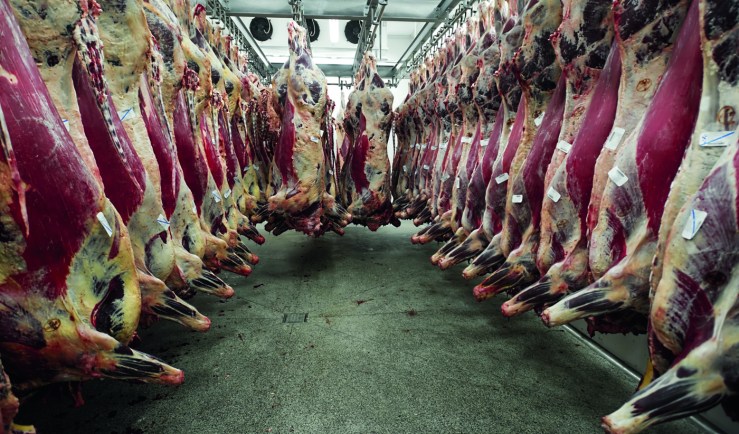
Among the main products in the export portfolio, soybeans remained the leading item, generating US$43.5 billion in foreign exchange revenue (+1.4%), with a record shipped volume of 108.2 million tons, an increase of 9.5%. Beef also registered a record, with revenues of US$17.9 billion (+39.9%) and an increase of 20.4% in volume. During the year 2025, 11 markets were opened for Brazilian beef.
Also in the animal protein sector, noteworthy is the increase of 19.6% in the value and 12.5% in the volume of pork exports, making Brazil, for the first time, the third largest exporter of the product in the world, and the increase of 0.6% in the volume of chicken exports, even in the face of a challenging scenario in the previous year, due to the first and only recorded case of avian influenza on commercial farms.
Coffee, another traditional export product, showed growth of 30.3% in value, totaling US$16 billion, driven by international prices that reached historical levels, both for green coffee and soluble coffee. Also noteworthy is the increase in the value and volume of exported fruits (+12.8% and +19.7%, respectively), in addition to the opening of 26 markets in the last three years, and for fish (+2.6% in value and +17% in volume).

Photo: Rodrigo Felix Leal
Although the soybean complex, animal proteins, the sugar and ethanol complex, and coffee lead in revenue from Brazilian exports, the 2025 trade balance registered significant growth in less traditional export products, which present opportunities for the sectors involved through the opening and expansion of markets. It is worth highlighting the achievement of records in specific products. After the opening of the Chinese market to Brazilian sesame in November 2024, exports of this product to that country have already generated US$195.1 million.
Another product with notable expansion was beef offal, which showed an increase of 20.6% in value (US$$ 605 million) and 16.9% in volume (267 thousand tons), with significant openings in the previous year, such as Indonesia and the Philippines.
Corn DDG (dried distillers grains), a co-product of ethanol production, also showed growth of 4.3% in volume (825 thousand tons). As an example, Turkey increased its purchases of this product from US$35.6 million to US$62.7 million (+76.1%). Beans, on the other hand, had a record performance in 2025, with an increase of 32% in value (US$443 million) and 55.5% in volume (533 thousand tons), compared to the previous year.
Several items that are not part of the main group of commodities reached record highs in 2025, when compared to 2024:
- Dried or crushed peppercorns: US$ 517.81 million in value (+81.1%) and 803 thousand tons (+34.6%)
- Peanut: US$ 366.9 million in value (+1.9%) and 311.5 thousand tons (+37.3%)
- Peanut oil: US$ 264.6 million in value (+147.4%) and 173 thousand tons (+180.4%)
- Fresh melons: US$ 231.5 million in value (+24.9%) and 283.4 thousand tons (+16.4%)
- Cashew nuts: US$ 75.8 million in value (+72.7%) and 16.6 thousand tons (+120.2%)
Support for Exporters
Throughout 2025, tools and initiatives such as AgroInsight, Passaporte Agro, and Caravanas do Agro Exportador were developed, bringing producers and cooperatives closer to opportunities in international markets, providing qualified information that stimulates and supports the entry of exporters into the international market.
AgroInsight, for example, was launched in January 2025 and has already identified more than 800 business opportunities, mapped by agricultural attachés in 38 countries. The positive results reflect the strategy of expanding the international reach of the field through new market opportunities.