EN
EN  PT_BR
PT_BR 
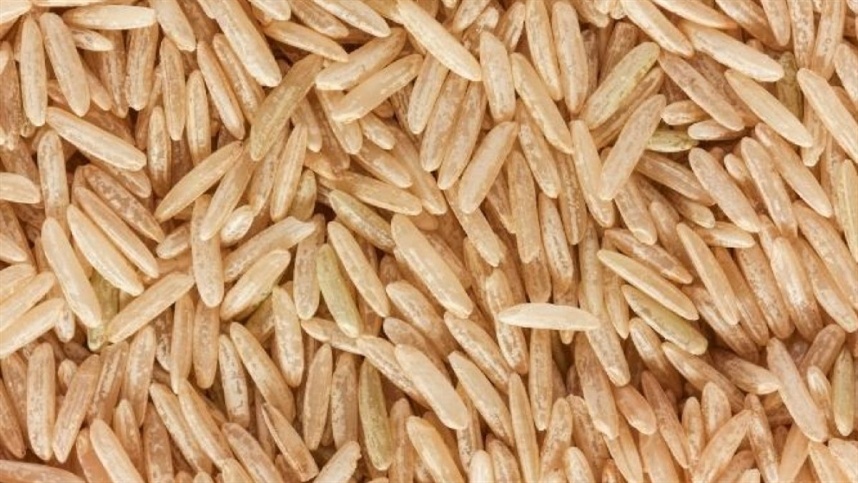
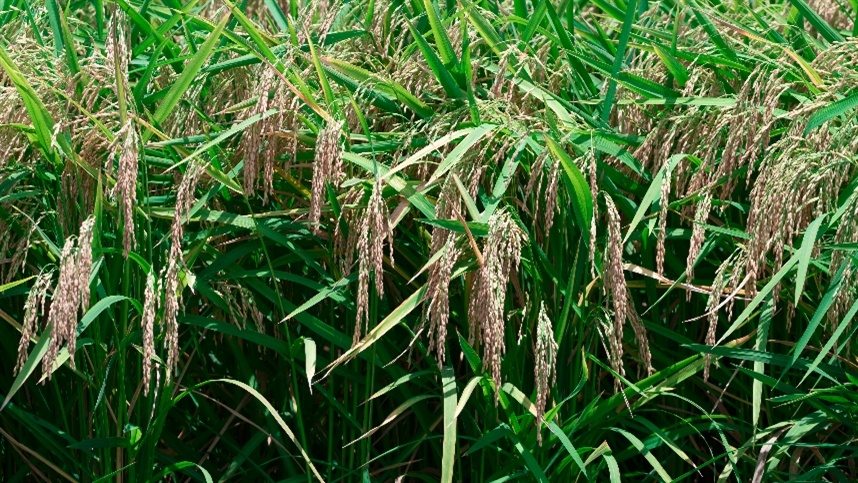
The drought in rice High-altitude soils can compromise the profitability of crops in the Brazilian Cerrado during the growing season, especially between November and March. According to data released by Embrapa, a new publication brings together management strategies, genetic improvement, and sowing planning to reduce the impacts of water deficiency and make production more resilient to climate change.
The publication “Upland rice: symptoms of water deficiency and mitigation strategies"It is available for free access and download on the Embrapa portal. The work was prepared by Embrapa Rice and Beans and brings together knowledge from the areas of physiology, biochemistry, genetics, agronomy and management."
According to data released by Embrapa, the document aims to provide support for researchers, technicians, students, and producers, as well as contribute to the adoption of more efficient and sustainable production practices. Upland rice cultivated in the Cerrado region is quite sensitive to drought during the growing season. Drought occurs when there is insufficient rainfall combined with excessive heat, causing soil water loss and water deficiency in plants.
To reduce the impacts of dry spells, the research highlights strategies such as proper crop management, genetic improvement, and sowing within the windows indicated by the Agricultural Zoning of Climatic Risk (ZARC).
Planting density plays an important role in the quantity and distribution of water available to plants. According to data released by Embrapa, the number of plants per area should consider natural resources, inputs used, and the area's history.
The goal is to balance competition for nutrients, water, and light. In drier years, management aims to prevent the crop from consuming available water too early due to excessive competition between plants. "Generally, in favorable environments and with modern cultivars, spacing between 17 and 25 cm is common, with 50 to 70 seeds per meter. This planned establishment of the plant population allows for better resource use efficiency," said Embrapa Rice and Beans researcher Mábio Lacerda.
The sowing season is also considered one of the most efficient practices for reducing yield losses in upland rice. Planning helps avoid the most sensitive development phases coinciding with periods of greater water scarcity.
According to data released by Embrapa, studies conducted by the institution show that late sowing can reduce crop profitability due to adverse environmental conditions, such as lower water availability in the soil.
In this context, technicians and producers can use the Zarc – Plantio Certo application. This tool considers agroclimatic risk and indicates the most favorable planting windows according to the cultivar cycle, sowing time, soil type, and location. The goal is to reduce the crop's exposure to unfavorable conditions. According to data released by Embrapa, the Zarc – Plantio Certo application can be accessed free of charge.
In addition to planting density and timing, the choice of cultivar also influences the crop's ability to withstand periods of water scarcity. According to data released by Embrapa, the upland rice breeding program of Embrapa Rice and Beans has been evaluating plants for tolerance to water scarcity since 2004. Among the results is the BRS Esmeralda cultivar, which exhibits broad cultivation adaptability, production stability, and hardiness.
According to Adriano Castro, coordinator of the upland rice breeding program at Embrapa Rice and Beans, research continues to advance. "Currently, in addition to two populations undergoing recurrent selection, specific crosses are being made for tolerance to water deficiency, in which segregating populations are conducted and evaluated under stress conditions," he pointed out.
According to Adriano Castro, new lines of research have also been incorporated to improve the supply of cultivars. Breeding has begun to utilize biotechnological tools, such as marker-assisted selection, genomic selection, and targeted gene editing.
The strategy aims to facilitate the identification of genes associated with drought tolerance in different parental combinations and to make the development of new cultivars more efficient and faster.
Soil management also appears among the strategies to cope with drought. According to data released by Embrapa, the No-Till Farming System and crop rotation contribute to water conservation and the reduction of the effects of water scarcity.
In the No-Till System, crop residue helps reduce soil moisture loss to the atmosphere during hot days. "The No-Till System also helps control surface runoff and rainwater loss, promoting greater water storage in the soil and reducing the risk of stress for upland rice," added Mábio Lacerda.
Crop rotation is another practice highlighted by Embrapa. According to data released by Embrapa, the succession of different crops contributes to improving the physical, chemical, and biological quality of the soil, including water retention capacity and organic matter concentration. The practice also favors the diversity of microorganisms beneficial to plants.
“Crop rotation is beneficial both because of changes in the physical structure of the soil, which directly affect water dynamics and plant rooting characteristics, and because of changes in the biological composition of the soil, such as the presence of microorganisms that solubilize essential plant nutrients and influence the level of plant tolerance to water stress,” explained Anna Lanna, a researcher at Embrapa Rice and Beans.
According to the researcher, maintaining an economically viable production system must consider the diversity of biologically integrated microorganisms, which contribute to nutrient cycling and can help minimize the effects of water deficiency.
Among the main groups are plant growth-promoting rhizobacteria, arbuscular mycorrhizal fungi, and nitrogen-fixing rhizobia.
These microorganisms are native to the soil, but can be introduced into crops as needed, through commercially available products classified as bio-inputs. "These microorganisms can improve the water retention capacity of plants, solubilize phosphorus, produce phytohormones such as auxins and cytokinins, fix atmospheric nitrogen, facilitate the decomposition of plant residues, increasing the humus content of the soil for the functional improvement of an agroecosystem," commented Anna Lanna.
According to data released by Embrapa, the strategies presented in the publication combine knowledge from different areas to reduce the impacts of drought on upland rice.
Adriano Castro, who is also the Deputy Head of Research and Development at Embrapa Rice and Beans, highlights the integration between physiology, biochemistry, genetics, agronomy, and management. "The ultimate goal is to contribute to the development and adoption of more resilient, efficient, and sustainable production practices, strengthening the adaptability and continuity of upland rice production in tropical systems," he concluded.