EN
EN  PT_BR
PT_BR 

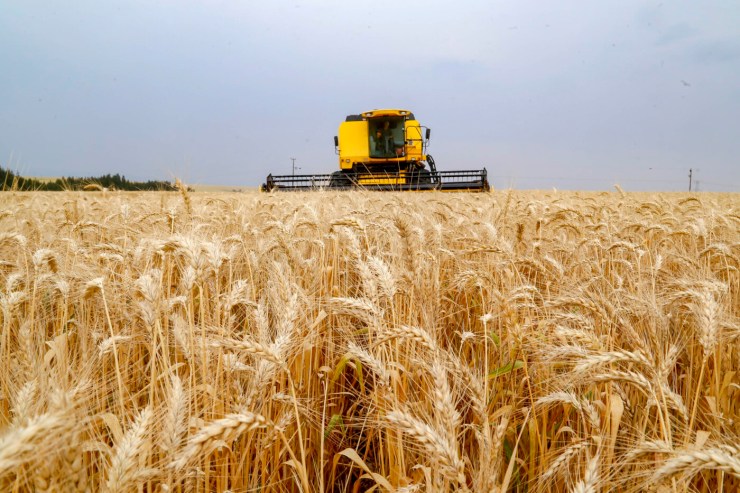
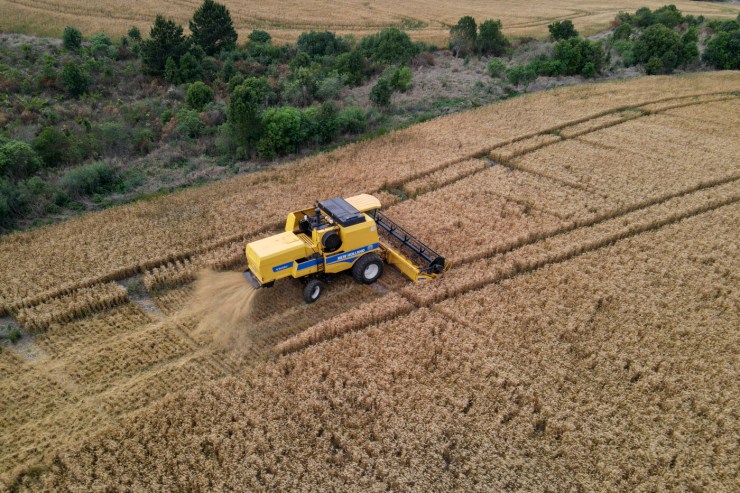
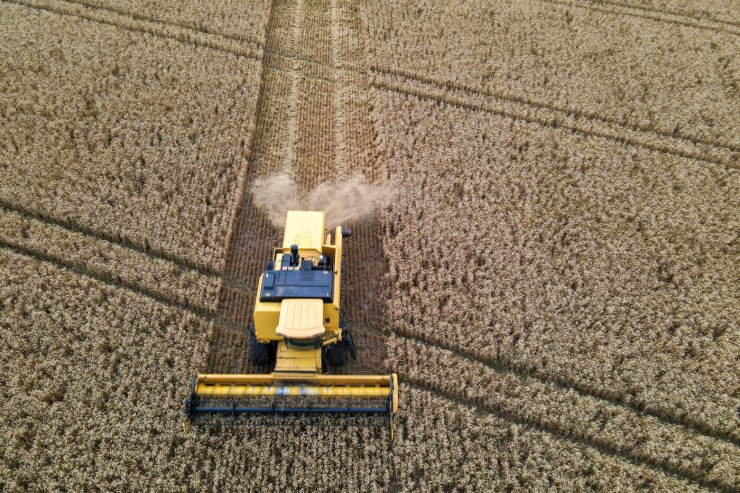
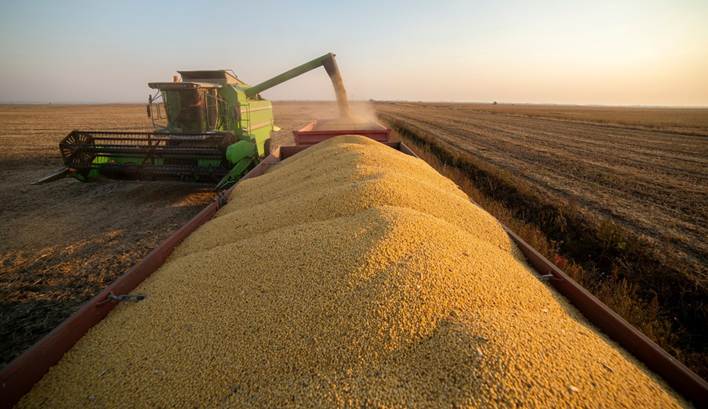
THE wheat August ends and September 2026 begins under the strong influence of water availability in the Midwest. According to data released by Conab, Goiás maintains only irrigated areas in the fields, while Mato Grosso do Sul intensified harvesting after registering a reduction in production, associated with blast disease and water restrictions.
In Goiás, crop performance was mainly determined by the production system. In rainfed areas, the scarcity of rain during the cycle compromised physiological processes such as tillering, stem elongation, floral differentiation, and grain filling.
According to data released by Conab, the impacts resulted in reduced yields. In some plots, the low economic viability of harvesting led producers to allocate the remaining crops to soil cover. This practice helps protect the surface, conserve residual moisture, and prepare the areas for the next agricultural cycle.
In the irrigated areas of Goiás, the agronomic performance was superior. The harvest began punctually in August and showed satisfactory yields.
According to data released by Conab, no cases of blast or other economically important diseases were recorded in irrigated wheat. Lower winter temperatures also contributed to reducing pest pressure.
The greater relative share of irrigated cultivation is precisely one of the factors that raises the estimated average yield for Goiás in this harvest. The importance of adequate water supply also appears in a simulation carried out by the Agricultural Decision Support System (SISDAGRO), of INMET, for an irrigated wheat crop in Cristalina (GO).
In the simulation, emergence occurred on May 12th and the considered cycle was 120 days. According to data released by INMET, the estimated water requirement for the crop during this period was 575.8 millimeters.
However, the accumulated rainfall reached only 69.2 millimeters, distributed over 13 days. This volume corresponded to approximately 12% of the estimated water demand.
The restriction was especially intense in July, when there was no rainfall, and in August, when the accumulated rainfall reached only 0.2 millimeters.
Given the low rainfall, the crop relied heavily on irrigation. In the simulation, 303.8 millimeters of water were applied, distributed in 12 applications of approximately 25 millimeters each. The applications occurred at progressively shorter intervals as the crop's evaporative demand increased.
Even so, the amount and interval between simulated irrigations were not sufficient to completely eliminate periods of water deficit. According to data released by INMET, the estimated accumulated water deficit reached 277.4 millimeters during the cycle.
Under the management conditions used in the simulation, water deficit resulted in an estimated loss of 39.9% of productive potential up to September 7th.
This percentage, however, is specifically related to the parameters used in the simulation, mainly the number of applications and the intervals between applications. Therefore, it does not necessarily represent the loss observed in commercial crops irrigated by center pivot systems.
In Ponta Porã, in the southwest of Mato Grosso do Sul, the performance of rainfed wheat was limited mainly by the irregular distribution of rainfall during the cycle.
According to data released by INMET, the simulation for a crop that emerged on May 19th indicated 236 millimeters of accumulated rainfall over 42 days, while the estimated water demand for the crop reached 393 millimeters.
Although June showed a more adequate distribution of rainfall and a reduced water deficit, the situation worsened in July.
That month, only 19.2 millimeters of precipitation were recorded, while the estimated water requirement for wheat reached 148.7 millimeters. As of July 21, soil water storage remained below 10% of capacity, indicating severe water restriction.
According to data released by INMET, this scenario can reduce leaf expansion and, consequently, the plant's ability to intercept solar radiation and perform photosynthesis.
With reduced photosynthetic capacity, biomass formation is impaired. In later stages of the cycle, water stress can also compromise grain formation and filling.
In the simulation, prolonged periods of low water availability during phases of high demand resulted in an estimated loss of 54.6% of productive potential.
In addition to water scarcity, the crop faced disease pressure in Mato Grosso do Sul. According to data released by Conab, the combination of high temperatures, humidity, and cloud cover favored the development of fungal diseases.
Rice blast, caused by Pyricularia oryzae, was particularly prominent in the producing regions of southwestern Mato Grosso do Sul.
The occurrence of the disease required attention from producers and contributed to adjustments in production estimates as the harvest progressed at the end of August.
For the period of September 3rd to 10th, the COSMO model forecast indicates an irregular distribution of rainfall in the Central-West Region.
The highest rainfall totals are expected in southwestern Mato Grosso do Sul and southern Goiás. In these areas, volumes should generally vary between 20 and 50 millimeters, with the possibility of values close to 100 millimeters in some locations, especially in northern parts of Mato Grosso do Sul.
In other areas of the Central-West region, the trend is for low rainfall totals, less than 10 millimeters, or an absence of significant precipitation.
The current situation calls for attention to the progress of the wheat harvest. Rain accompanied by increased cloud cover and relative humidity may reduce the windows for field work and favor longer periods of leaf wetness.
Given the predicted conditions, the recommendation is to prioritize dry periods to continue harvesting operations, reinforce phytosanitary surveillance, and continuously monitor weather forecasts and warnings issued by INMET.
Monitoring moisture conditions and diseases can aid in decision-making and the optimization of field operations, especially in areas where harvesting is still underway.