EN
EN  PT_BR
PT_BR 
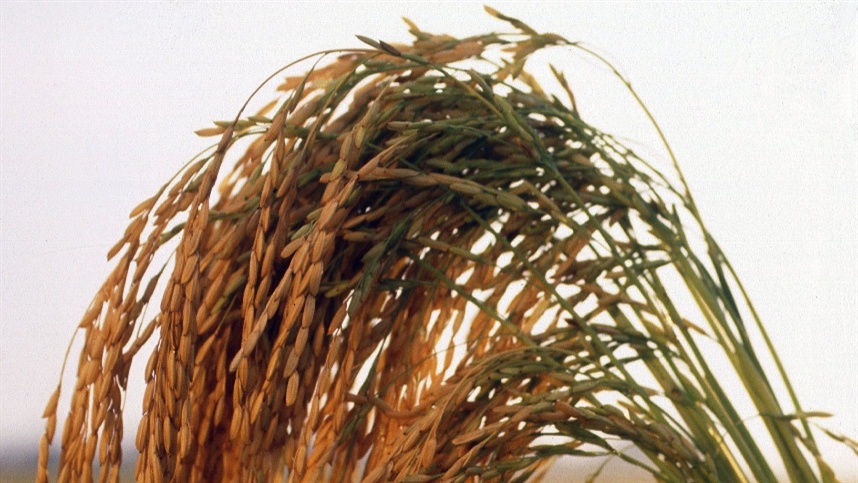
Pre-planting of rice Irrigated planting between June and August is strategic for reducing the weed seed bank and preventing the selection of herbicide-resistant biotypes. Management involves preparing the area and controlling weeds. rice red and grass-riceJudicious use of herbicides, rotation of mechanisms of action, and water management.
In irrigated rice, the pre-planting phase encompasses the period between the harvest of the previous crop and the sowing of the next crop. This phase includes fallow periods, possible winter crops, water management, successive desiccations, and preparation for crop establishment.
During this period, the producer needs to control regrowth of volunteer rice and red rice, as well as reduce the initial flushes of grasses, sedges, and other invasive plants. The goal is not just to leave the area seemingly clean. The management aims to reduce the selection pressure on herbicides and prevent the same mechanism of action from being used repeatedly over the years.
According to the technical references cited in the material, the combination of cultural, mechanical, water management, and chemical strategies is fundamental to reducing dependence on successive applications of herbicides from the same group.
Each herbicide application acts, in practice, like a sieve. Susceptible plants are eliminated, while tolerant or resistant individuals can survive and produce seeds. When the same "sieve" is used repeatedly, the resistant population tends to increase. Therefore, alternating mechanisms of action and integrating them with other practices are important to slow down this process.
The mechanism of action corresponds to the specific plant site or process targeted by the herbicide. Examples include the inhibition of ALS, ACCase, photosystem II, and EPSPS. Resistance can occur due to alterations in the site of action, which hinder the binding of the product, or through detoxification mechanisms and other physiological processes.
Among the problematic species in irrigated rice cultivation are red rice, barnyardgrass, sedges, and some broadleaf plants. These species exhibit genetic variability and a high capacity for seed production. In systems without crop rotation and with repeated use of the same herbicides, the risk of multiplication of resistant biotypes increases.
The repeated use, over several years, of herbicides with the same mechanism of action is among the factors that most favor the selection of resistance. Late or poorly executed desiccations, the absence of crop rotation, and inadequate water management also contribute to the problem.
Rotating herbicide mechanisms throughout the year is among the main preventative strategies. This measure can be associated with the judicious use of residual herbicides, targeted mechanical control of escapes, and the adoption of alternative winter crops. Early management of volunteer rice and red rice prevents these plants from completing their cycle and replenishing the soil seed bank.
In areas with persistent weed patches, localized mechanical control can also reduce the population of plants exposed to herbicides and prevent these patches from acting as vectors for weed spread. Straw management is another tool. Maintaining adequate cover can hinder the emergence of some species and reduce the number of plants that will subsequently need to be chemically controlled.
When the production system allows, crop rotation with other crops in alternate years is one of the most efficient strategies for breaking weed cycles.
Changing the crop also alters the timing and methods of intervention, reducing the continuous exposure of the same population to the same chemical tools. Cultivating alternative species during the winter can help suppress weeds, interrupt cycles, and reduce the input of new seeds into the soil.
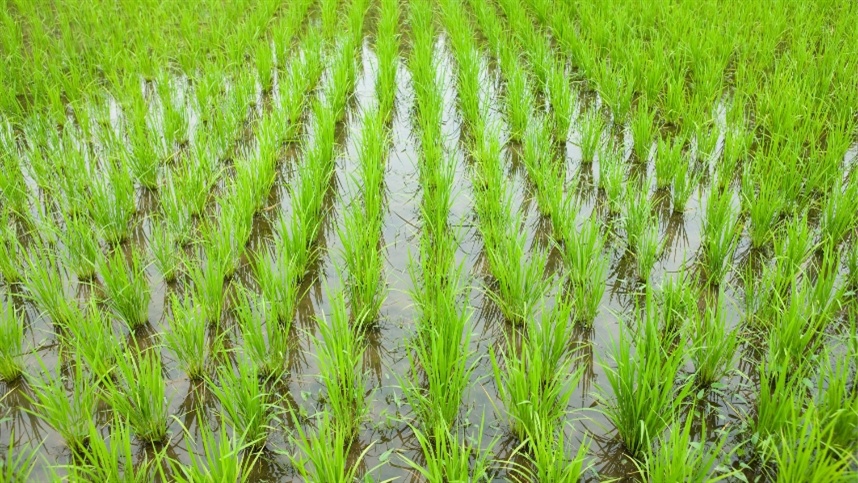
Water management is an integral part of the weed control system for irrigated rice. A continuous and well-managed water application can act as a complementary tool for suppressing certain species.
Therefore, herbicide programs should be planned in conjunction with water management, and not as an isolated strategy.
The choice of cultivars can also contribute. Materials with rapid tillering and greater soil coverage capacity favor rice competition with weeds. Seeding density can be adjusted to accelerate row closure, while fertility management should favor crop development without excessively stimulating weeds.
Before planting, the producer must conduct a survey of weeds present in the off-season, identifying the species and estimating their densities.
It is also important to record the herbicides and mechanisms of action used in recent growing seasons. This history helps identify areas subjected to repeated pressure from certain groups. The presence of plants surviving usual doses, persistent patches, and localized control failures may indicate suspected resistance.
In these situations, the material recommends seeking technical support to test combinations and sequences of herbicides with different mechanisms of action and to reinforce non-chemical measures.
In the stage immediately preceding sowing, desiccation must consider the mechanism of action of the herbicide that will be used later in post-emergence. Application should occur under appropriate conditions of humidity, temperature, and weed growth stage. The goal is to avoid conditions that result in insufficient control and favor the survival of weeds.
When technically indicated, products with distinct mechanisms of action can be combined, always respecting official recommendations. However, the use of mixtures does not replace the rotation of mechanisms of action over the years. This strategy needs to be part of an integrated management program.
The first stage occurs after harvesting and aims to prevent regrowth and remaining plants from producing new seeds. During the off-season, the producer can choose between fallowing, winter cultivation, or chemical and mechanical management, seeking to reduce the presence of adult weeds.
Even before planting, the focus shifts to final adjustments of cover, soil moisture, water depth (when applicable), and control of emerged plant flows. This planning reduces the need to rely on a single mechanism of action throughout the entire cycle.
Selecting resistant plants can lead to control failures early in the growing season. As a consequence, it increases the need for rework and additional applications. The loss of efficient options also increases competition for light, water, and nutrients, potentially compromising rice stand and yield potential. The impact is also seen in costs. Alternative herbicides may be more expensive, while monitoring and additional mechanical operations increase fuel consumption and machine downtime.
In the long term, allowing resistant plants to produce seeds means expanding the problematic seed bank in the soil, affecting not only the current crop but also subsequent cycles.
The use of herbicides must strictly follow the product label and agronomic prescription. The material recommends using only products registered for the crop and for the intended application method. Dosages, application times, safety intervals, and indicated environmental conditions must also be respected.
Equipment calibration is equally important to avoid uneven distribution. Underdosing can favor survivors, while excessive applications increase environmental and phytotoxicity risks.
During handling and application, the indicated personal protective equipment must be used. Disposal of packaging and handling of leftover spray solution must also comply with current legislation.
Suspected resistance should be discussed with technical assistance and, when possible, referred for further evaluation. The problem extends beyond the boundaries of a single property. The loss of effectiveness of an important herbicide can affect the entire production system of a region.
Therefore, pre-planting management should combine the area's history, rotation of action mechanisms, early control of the main species, winter crops, straw management, mechanical strategies, and proper water use.
Adopting this set of practices helps to reduce the rate of selection of resistant biotypes, prolong the effectiveness of available herbicides, and sustain the productivity of irrigated rice.