EN
EN  PT_BR
PT_BR 
The Mato Grosso Soybean and Corn Producers Association (Aprosoja MT) reiterated its concern on Thursday (January 22nd) about the impacts of the minimum road freight rate on the competitiveness of Brazilian agribusiness. According to the organization, the methodology currently adopted presents significant structural inconsistencies, disregards the real dynamics of the market, and increases logistics costs, especially in producing states like Mato Grosso.
Created in 2018, the National Policy on Minimum Freight Rates for Road Transport emerged as an emergency measure to end the truckers' strike that, at the time, paralyzed the country. However, more than six years later, the productive sector believes that the model has not been modernized and has begun to generate permanent distortions. Aprosoja MT emphasizes that the current pricing system imposes a minimum rate that does not respect free enterprise, free competition, and price freedom, principles guaranteed by the Federal Constitution.
According to Lucas Costa Beber, president of Aprosoja MT, the effects of the minimum freight rate are manifesting themselves in a scenario already marked by historical structural bottlenecks, such as the lack of storage capacity.
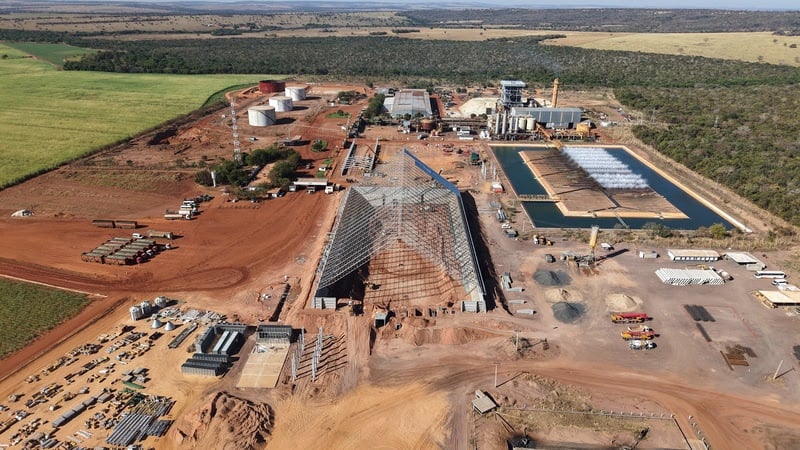
“Storage is undoubtedly the biggest bottleneck in Brazilian agriculture. Today, in the state of Mato Grosso, the largest producing state, we are able to store less than half of our production, and less than half of that storage is in the hands of the producers,” he stated. According to him, the lack of storage forces producers to move their production at the peak of the harvest, increasing the cost of grain transportation due to the concentration of freight demand during that period.
Another key point is that the minimum freight rate affects return freight and ignores the typical seasonality of agribusiness. Traditionally, cheaper return freight helped balance the costs of transporting fertilizers and other inputs. With the price fixing, this logic ceases to exist, increasing the cost of production. “CADE itself has already recognized that the minimum freight rate generates effects similar to cartel formation, that is, it impacts the entire market. The minimum freight rate disregards several aspects of our country's reality, and this cost increase is not absorbed by the government, but by the producer, who cannot pass it on in the price of their product,” said Lucas Costa Beber. “This freight ends up being more expensive, and seasonality is disregarded,” he added.
The organization also draws attention to technical flaws in the methodology of the National Land Transport Agency (ANTT), such as the depreciation calculation based on new trucks, when the average age of the Brazilian fleet exceeds 15 years, and the prioritization of criteria related to the number of axles and distance, to the detriment of the actual tonnage.
2 / 2
transported. In practice, this favors large vehicles and reduces the competitiveness of independent truck drivers who operate smaller capacity trucks. "These truck drivers, with seven- or four-axle trucks, or semi-trucks, end up losing competitiveness," he explains.
Currently, ANTT (National Agency for Land Transport) is conducting a review process of the minimum freight rate methodology, which included a public hearing and the presentation of technical studies, such as the one developed by Esalq-Log with the support of Aprosoja MT and other entities. However, the agency itself has already informed that the update scheduled for publication by January 20th will not be able to incorporate these contributions, precisely at the peak of the harvest. For Aprosoja MT, this represents yet another factor in the loss of competitiveness. "Brazilian production will once again be harmed by the inefficiency and slowness of the State," they stated.
The issue is also under analysis by the Supreme Federal Court (STF), which is discussing the constitutionality of the policy. The sector expects the Court to consider the economic and competitive impacts of the price fixing. "Because otherwise Brazil will increasingly lose competitiveness in the international market, and our competitors will seize the market, export more, and generate more foreign exchange for their countries, something that Brazil could be benefiting from," concluded the president of Aprosoja MT.
Aprosoja Mato Grosso emphasizes that it is not opposed to fair remuneration for road transport, but advocates for a model that reflects the country's operational reality, respects free competition, and promotes balance between producers, truck drivers, and consumers, without compromising logistical efficiency and national food security.