EN
EN  PT_BR
PT_BR 
Embrapa researcher Mariangela Hungria is on the TIME100 Climate 2025 list, which recognizes the 100 most innovative and influential personalities in the world who are driving action on climate-related issues. Access it by clicking [here]. hereIn the Defenders category (Driving action for communities). The complete list (TIME100 Climate) will be published in the November 10, 2025 edition, available at newsstands from Friday, October 31. “Working with food production aiming for food security using sustainable practices that allow us to ‘defend’ the planet is a privilege,” emphasizes Mariangela Hungria. “I have spent my life researching the replacement of chemicals with biologicals in agriculture, whenever possible. This recognition has enormous value, as it values the adoption of sustainable practices in agriculture,” celebrates the scientist.
Mariangela will participate in Embrapa's activities at Agrizone during the 2025 United Nations Climate Change Conference COP30, which will be held in Belém (PA) in November. "I hope to convey the message about the viability of using biological products to replace agrochemicals. With this, we mitigate greenhouse gas emissions and also increase access to quality food," she states.
Contributions in the area of bio-inputs
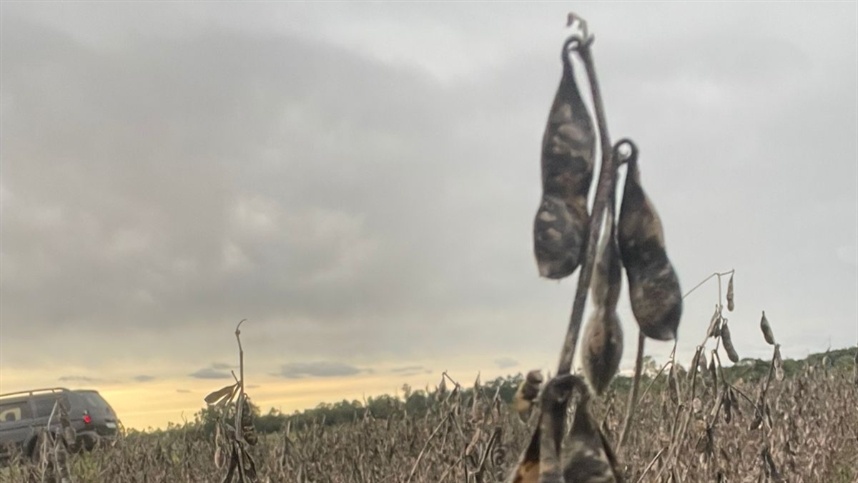
 For over 40 years, Embrapa researcher Mariangela Hungria has been developing innovations in the field of soil microbiology, resulting in the launch of more than 30 technologies. Her research has focused on increasing food production and quality through the total or partial replacement of chemical fertilizers with microorganisms possessing properties such as biological nitrogen fixation (BNF), phytohormone synthesis, and the solubilization of phosphates and potassium rocks. Even in "old areas," that is, areas that have already received inoculants, annual inoculation of soybeans with Bradyrhizobium increases soybean grain production by an average of 81% of the area cultivated with soybeans in Brazil. Even more importantly, high yields are achieved without any application of nitrogen fertilizer. The technology is adopted in 85% of the area cultivated with soybeans in Brazil.
Another technology launched by the researcher was soybean co-inoculation, which combines nitrogen-fixing bacteria (Bradyrhizobium) and plant growth-promoting bacteria (Azospirillum brasilense). In just over 10 years, co-inoculation has already been adopted in approximately 351 TP4T of the total cultivated soybean area. Combining the benefits of inoculation and co-inoculation of soybeans, the estimated savings by eliminating the use of nitrogen fertilizers was estimated at US$25 billion by 2024 alone. In addition to the economic benefit, the use of these bacteria helped mitigate the emission of more than 230 million tons of CO₂ equivalent into the atmosphere by 2024.
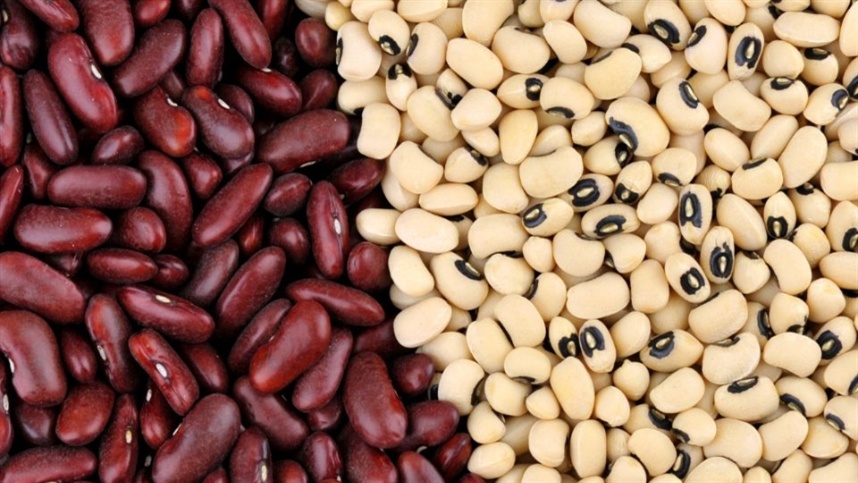
In addition to her work with soybeans, the researcher also coordinates research that has led to the launch of other technologies: authorization/recommendation of bacteria (rhizobia) and co-inoculation for the common bean crop, Azospirillum brasilense for corn and wheat crops, and for pastures with brachiaria grasses. Also regarding grasses, in 2021, the researcher's team launched a technology that allows for a 25% reduction in nitrogen topdressing fertilization in corn through inoculation with Azospirillum brasilense, generating significant economic benefits for farmers and positive environmental impacts for the country.
Career path and recognitions
Born in 1958 in São Paulo and raised in Itapetininga (SP), Mariangela says that since childhood she has been curious to learn about aspects related to land, water, and air. Her pursuit of knowledge and her scientific spirit led her to study Agronomic Engineering (Esalq/USP), obtain a master's degree in Soil Science and Plant Nutrition (Esalq/USP), and a doctorate in Soil Science (UFRRJ). Mariangela recounts that she pursued her doctorate at UFRRJ while working on her thesis at Embrapa, at the invitation of researcher Johanna Döbereiner, a scientist who revolutionized tropical agriculture by discovering and applying biological nitrogen fixation (BNF) in agricultural crops.
In 1982, she became a researcher at Embrapa: initially at Embrapa Agrobiology (Seropédica, RJ) and, since 1991, at Embrapa Soybeans (Londrina, PR). Mariangela also holds three post-doctoral degrees from universities in the United States and Spain (Cornell University, University of California-Davis, and University of Seville). The scientist has over 500 scientific publications, technical documents, books, and book chapters. She has also supervised more than 200 undergraduate and graduate students. Reflecting on her career, Mariangela cites coherence, persistence, and resilience as key characteristics. “I have always believed in life in the soil, in microorganisms restoring fertility, in highly productive agriculture that does not harm the environment. I have never deviated even a millimeter from what I believed. This coherence, both in research and in my stance, has brought scientific credibility and strong connections with the agricultural sector,” emphasizes the researcher.
Mariangela is a Commander of the National Order of Scientific Merit and a full member of the Brazilian Academy of Sciences, the Brazilian Academy of Agronomic Sciences, and the World Academy of Sciences. She is a professor and advisor in the postgraduate programs in Microbiology and Biotechnology at the State University of Londrina. She is also active in the Brazilian Society of Soil Science and the Brazilian Society of Microbiology.
Since 2020, Mariangela has been ranked among the 100,000 most influential scientists in the world, according to a study by Stanford University (USA). In 2022, the researcher held the top Brazilian position, confirmed in 2025, in Plant Science and Agronomy and in Microbiology, in a list published by Research.com, a website that provides data on scientific contributions worldwide.
She has received several awards for sustainability in agriculture, such as the Frederico Menezes Award, the Lenovo-World Academy of Sciences Award, the Agricultural Parliamentary Front Award, and the Bunge Foundation Award. In 2025, she received the Women in Science Award, promoted by the National Council for Scientific and Technological Development (CNPq), in partnership with the Ministry of Women, the British Council, and the Development Bank of Latin America and the Caribbean. In 2025, the World Food Prize Foundation awarded the World Food Prize (WFP), known as the "Nobel Prize of Agriculture," to researcher Mariangela Hungria.