EN
EN  PT_BR
PT_BR 
Second-crop corn in Brazil is largely in critical stages of development, where stress can significantly compromise its yield potential. This scenario is observed in corn crops in the states of Paraná and Mato Grosso do Sul, where high temperatures coupled with reduced rainfall have been recorded in several areas throughout the growing season. In recent days, rainfall, especially in Paraná and southern Mato Grosso do Sul, has contributed to improved soil moisture conditions, favoring the partial recovery of crops. However, due to the stresses experienced in previous periods, productivity losses persist.
In Paraná, second-crop corn fields have faced prolonged water scarcity, especially in the Southwest region. In the municipality of Francisco Beltrão, estimates from the Agricultural Decision Support System (SISDAGRO) indicate a persistent water deficit since the end of February and beginning of March. The irregularity and low rainfall volumes throughout the cycle have been insufficient to replenish soil moisture, keeping the crops under continuous water stress, especially during the flowering and grain-filling stages, which have a high demand for water. This scenario has resulted in a reduction in productive potential, with records of an estimated accumulated productivity loss of 59.91 TP4T in the municipality of Francisco Beltrão/PR (Figure 1).
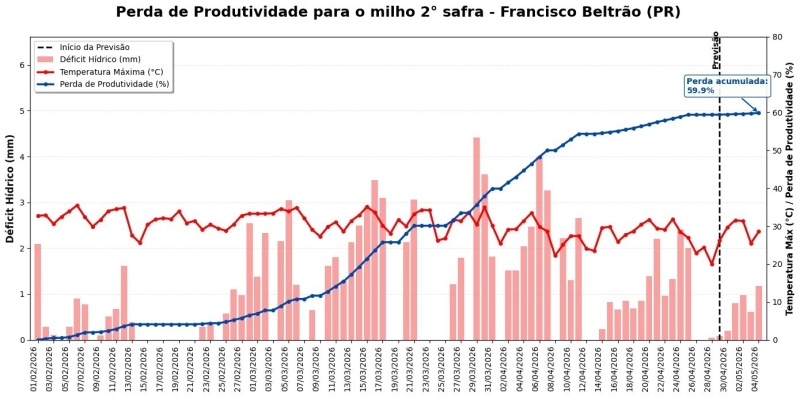
Among the main impacts observed are reduced grain filling, ear abortion, premature senescence, and stand heterogeneity, factors that compromise both yield and final production quality. The persistence of water deficit tends to increase the risks of additional losses, especially in rainfed areas and in soils with lower water retention capacity, potentially impacting the completion of the second corn crop in southwestern Paraná.
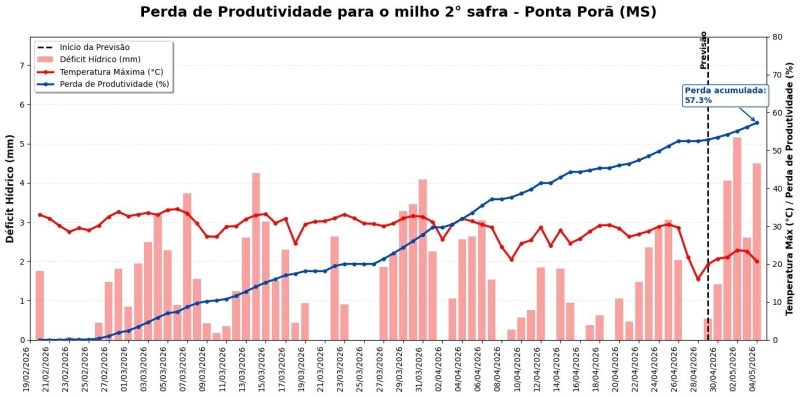
In Mato Grosso do Sul, the scenario is similar to that observed in western Paraná, where, throughout March, low rainfall predominated, with long dry periods associated with high temperatures. These conditions resulted in a marked water deficit in the corn crop, as exemplified by the municipality of Ponta Porã/MS (Figure 2). In April, some rainfall events were recorded, but irregularly, which only partially contributed to replenishing soil moisture. Considering the high water demand of corn at this stage of development, these rainfalls were insufficient to meet the crop's needs, maintaining the water deficit and limiting growth and yield potential.
Weather forecast
The forecast for the coming days indicates irregular rainfall distribution in the states of Paraná and Mato Grosso do Sul. In Paraná, the highest accumulations are expected in the southeast and east of the state, with volumes of up to 40 mm. However, in other areas of Paraná, the expected accumulations should remain below 20 mm. In contrast, in Mato Grosso do Sul, the forecast indicates volumes of less than 10 mm or even no rain in most of the state until next Tuesday (May 5th).
Maximum temperatures in Paraná are expected to range between 20°C and 30°C over the next few days. In Mato Grosso do Sul, higher temperatures are expected, between 28°C and 30°C, with values that could exceed 32°C in areas of the far north of the state. Associated with the heat, relative humidity tends to remain below 40%, especially in northwestern Paraná and in areas of eastern and southwestern Mato Grosso do Sul. This scenario of high atmospheric demand favors the reduction of soil water reserves throughout the week, potentially worsening the water deficit and increasing the risk of crop losses, especially for crops in more susceptible areas.
This situation reinforces the need for careful planning of agricultural activities, recommending continuous monitoring of meteorological updates and soil moisture conditions to support decision-making in crop management, reduce operational risks, and optimize the planning of field operations.