EN
EN  PT_BR
PT_BR 

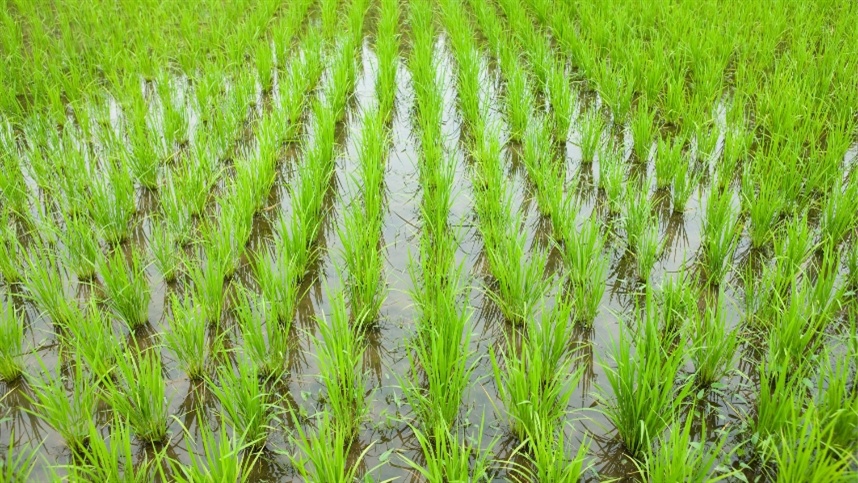
In the culture of riceProtecting the productive potential built up throughout the growing season requires attention to various factors, especially the management of diseases that can compromise productivity, grain quality, and profitability. For BASF, this protection needs to begin before symptoms appear and consider the specific characteristics of each crop.
“The great evolution lies precisely in how to transform technological innovations into real benefits for the farmer,” says Graziela de Morais, Crop Marketing Manager at BASF Agricultural Solutions. According to her, the industry needs to go beyond offering new molecules and understand the agronomic challenges faced in the field.
“Simply bringing in a new molecule isn’t enough. Increasingly, we need to respond to the needs that exist in the field: what is the farmer’s pain point? What’s happening in the fields?” he says.
Therefore, disease management in rice depends on factors such as the area's history, cultivar selection, climatic conditions, agronomic practices, and the correct timing of intervention. The strategy also considers that the producer has already made a series of investments throughout the cycle, including seeds, fertilization, irrigation, and management.
“It’s not enough for him to just treat the problem at the moment, investing in seeds, fertilizer, and irrigation, especially for rice, and leave other aspects, mainly disease control, unattended. And that will certainly have an impact on the crop,” says Graziela.
BASF's vision is to work on the production system in an integrated way, seeking to connect technology to the needs of each stage of the crop.
“As an industry, BASF has been looking at this system as a whole. How can we contribute to protecting this productive potential all the way to harvest?” he explains.
Management begins before application.
Among the phytosanitary challenges for the crop are blast, brown spot, and sheath blight, which require control strategies according to the conditions of each area.
For Graziela, management should not be understood merely as a response to an already established problem. Planning must consider the crop's history, environmental conditions, and the appropriate time for intervention. "The role of Kilymos® is to be a tool within this management program that begins, as we've already mentioned, long before application. It involves the area's history, the choice of cultivar, climatic factors, agronomic practices, and the appropriate time for intervention," she states.
According to her, the product has both preventive and curative effects, but the recommendation is to prioritize preventive management. "Ideally, we should always work on the preventive effect. And it is in this context that this technology gains relevance in expanding the available tools and helping farmers manage important diseases," she says.
Kilymos® expands BASF's rice portfolio.
It is within this strategy that BASF presents Kilymos®, a fungicide developed for disease management in rice cultivation. “Kilymos® was born precisely in this context of the need for increasingly efficient tools in rice cultivation. It obviously expands BASF's portfolio for this crop,” says Graziela.
According to Graziela, the product combines two active ingredients, one of which is Revysol® technology, which acts on important crop diseases.
"In practice, the great advantage is offering a tool with a broad spectrum for diseases that impact rice, such as blast, brown spot, and sheath blight, contributing to this productive potential," he explains.
Graziela emphasizes, however, that the fungicide should be included in a broader strategy.
“Kilymos® should not be seen as just an isolated solution. It is part of a management strategy, and with all this in mind, BASF is bringing this product to enhance this integrated management that we believe truly delivers results for the farmer's crops.”
Technology seeks to expand protection.
Another point highlighted by BASF is the presence of Revysol® technology in the formulation. According to Graziela, the aim is to transform the molecule's characteristics into noticeable benefits in the field.
"For the producer, the most important thing is not necessarily understanding the complexity of the molecule, but what that represents for him in the field, what that will translate to him," he says.
The technology offers absorption capacity, systemic action, and a residual effect. "This translates into a technology that offers a very high absorption capacity. So, it has a systemic action, a residual effect, meaning it will stay on the crop's leaves longer, protecting against diseases for a longer period," he says.
She also states that the technology aims to maintain consistent protection across different weather conditions.
“It has greater consistency, even in conditions like heat and rain. And, as I said, we live in a tropical country, a country that greatly favors fungal infections, and Revysol® is a molecule that allows us to have greater protection against this tropical climate,” he explains.
Proper use is part of the strategy.
For BASF, the efficiency of the tools also depends on how they are used over time. "We want to maintain the efficiency of the tools for as long as possible so that the farmer has access to them. Therefore, making good use of the products, in the appropriate way, is essential," says Graziela.
The strategy therefore involves integrating different decisions within the crop, instead of focusing management solely on fungicide application.
"At the end of the day, what's important is to bring the best possible control to these diseases and protect everything that the farmer has built up during the harvest season, which is their productivity, quality, and profitability," he summarizes.
Grain quality also comes into play. Graziela points out that, with rice, reaching the end of the cycle with good quality is crucial for processing. "For rice, it's extremely important for the farmer to finish their crop, have a harvest, and arrive at a grain of good quality so that we can proceed with processing that grain."
Between the agronomic challenge, management, and the technology that should guide innovation in the field, "this connection between technology, agronomic need, and results is what defines innovation," he concludes.